

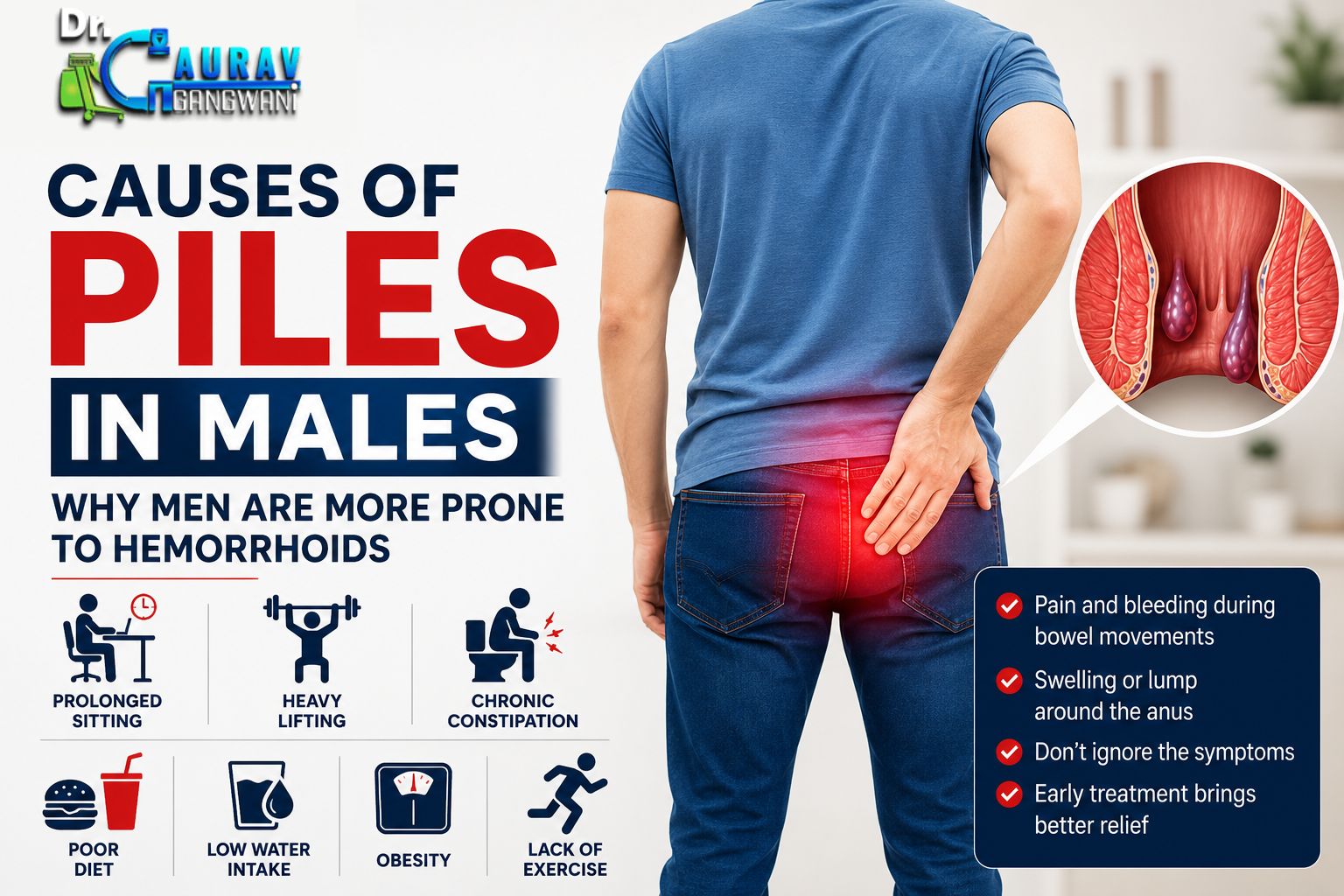
If you have pain, bleeding, or swelling during bowel movements, don’t ignore it. Early treatment and healthy lifestyle changes can help prevent piles from getting worse.
Piles are common in both men and women, but men often have a higher risk because of habits like prolonged sitting, heavy lifting, constipation, and poor eating habits. Understanding the causes can help you prevent hemorrhoids and seek piles treatment at the right time.
Piles, also called hemorrhoids, are swollen veins inside the rectum or around the anus. They develop when too much pressure is placed on these veins over time.
Piles can be:
The severity of symptoms depends on the size and type of hemorrhoids.
Men often develop piles because of daily habits that increase pressure on the rectal veins.
Some common reasons include:
Ignoring mild discomfort can allow hemorrhoids to become larger and more painful over time.
Several factors can increase the risk of hemorrhoids in men.
Constipation is one of the leading causes of piles.
When bowel movements become difficult, excessive straining puts pressure on the veins inside the rectum. Repeated straining weakens these veins and causes swelling.
Common reasons for constipation include:
Keeping bowel movements soft is one of the best ways to prevent piles.
Many men spend most of their day sitting at a desk, driving, or working on computers.
Long periods of sitting increase pressure on the lower rectum, making hemorrhoids more likely.
People at higher risk include:
Standing up and walking every hour can help reduce this pressure.
Frequent heavy lifting is another major reason men develop piles.
Whether lifting weights in the gym or carrying heavy objects at work, repeated strain increases pressure inside the abdomen and rectal veins.
This does not mean you should stop exercising.
Instead:
Fiber keeps stool soft and easy to pass.
Many men eat large amounts of processed foods, fried snacks, and fast food while consuming very little fiber. A poor diet increases constipation, making hemorrhoids more likely.
Knowing which foods to avoid in piles can also help reduce flare-ups and support faster recovery from piles.
Good fiber sources include:
Small dietary improvements can make a big difference.
Water works together with fiber to keep digestion healthy.
Without enough fluids, stool becomes hard and dry, increasing the need to strain during bowel movements.
Most adults should drink enough water throughout the day unless advised otherwise by their doctor.
Being overweight increases pressure inside the abdomen and pelvic area.
This extra pressure affects the veins around the rectum, making piles more common.
Losing even a small amount of weight can lower the risk and improve symptoms.
A sedentary lifestyle slows digestion and increases constipation.
Simple daily movement helps improve bowel function.
Helpful activities include:
Even 30 minutes of activity each day can support healthy digestion.
While constipation is a well-known cause, ongoing diarrhea can also irritate the rectal area.
Frequent bowel movements inflame the tissues around the anus, increasing the chance of hemorrhoids.
If diarrhea lasts for several days, it should be evaluated by a doctor.
As men grow older, the tissues supporting the rectal veins naturally weaken.
This makes hemorrhoids more common after the age of 45, although younger adults can also develop piles due to unhealthy habits.
Genetics can also play a role.
If close family members have had piles, you may have a higher chance of developing them, especially when combined with poor lifestyle habits.
Recognizing symptoms early helps prevent complications.
Watch for signs like:
If you experience pain while sitting along with these symptoms, it may not always be simple piles and should be properly evaluated.
A specialist should always check persistent symptoms.
Many cases of piles can be prevented by making healthier daily choices.
Here are some practical tips:
Small habits practiced consistently can protect your digestive health.
Many people feel embarrassed to discuss piles, but delaying treatment often makes the condition worse.
You should see a doctor if:
Early diagnosis often leads to faster recovery and less invasive treatment.
Dr. Gaurav Gangwani carefully evaluates every patient to identify the exact cause and recommend the most suitable treatment plan. At Dr. Gangwani’s Vascular Clinic, patients receive modern care focused on relieving symptoms and reducing the chances of recurrence.
Piles are common, but they should never be ignored. Most cases develop because of daily habits like constipation, prolonged sitting, poor diet, heavy lifting, and lack of exercise. The good news is that many of these causes are preventable with simple lifestyle changes.
If you notice bleeding, pain, or swelling that does not improve, seek medical advice without delay. Early treatment helps you recover faster, avoid complications, and return to your normal routine with confidence.
Men often have lifestyle factors such as prolonged sitting, heavy lifting, constipation, and poor eating habits that increase pressure on the rectal veins, making hemorrhoids more common.
Heavy weight lifting with improper technique can increase pressure in the abdomen and rectum, raising the risk of hemorrhoids. Using proper form and breathing correctly can help reduce this risk.
Mild piles may improve with a high-fiber diet, proper hydration, and healthy bowel habits. However, persistent or severe symptoms should be evaluated by Dr. Gaurav Gangwani for appropriate treatment.
Fiber-rich foods such as fruits, vegetables, whole grains, beans, oats, and lentils help keep bowel movements regular and reduce the risk of constipation.
You should schedule a consultation if you experience repeated bleeding, severe pain, swelling, recurring hemorrhoids, or symptoms that do not improve with home care. Early treatment can prevent the condition from becoming more serious.
Dr. Gangwani Vascular Clinic, 302/TGN SQUARE 3rd floor Chandawarkar lane Borivali west Mumbai 400092
+91 9326195964
drgauravgangwani@gmail.com
Monday to Saturday: 8.30 am to 8.00 pm. For any quires & assistance please call on: +91 9082394787
Copyright 2026 – www.drgauravgangwani.com
Website Managed by SEO Discovery
WhatsApp us