-
Mobile: +91 9082394787
-
Phone: +91 9326195964
-
Email: drgauravgangwani@gmail.com

Chemoport Insertion: Dependable IV Access for Your Chemotherapy Treatment
Patients undergoing chemotherapy treatment often need intravenous access again and again. Chemoport insertion gives reliable long-term venous access for these repeated treatments. At Dr Gangwani’s Vascular Clinic, Dr Gaurav Gangwani, an interventional radiologist, places chemoports using image guidance through a small puncture, with precise positioning and minimal surgical intervention.
Understanding the Device
What Is a Chemoport and How Does It Help?
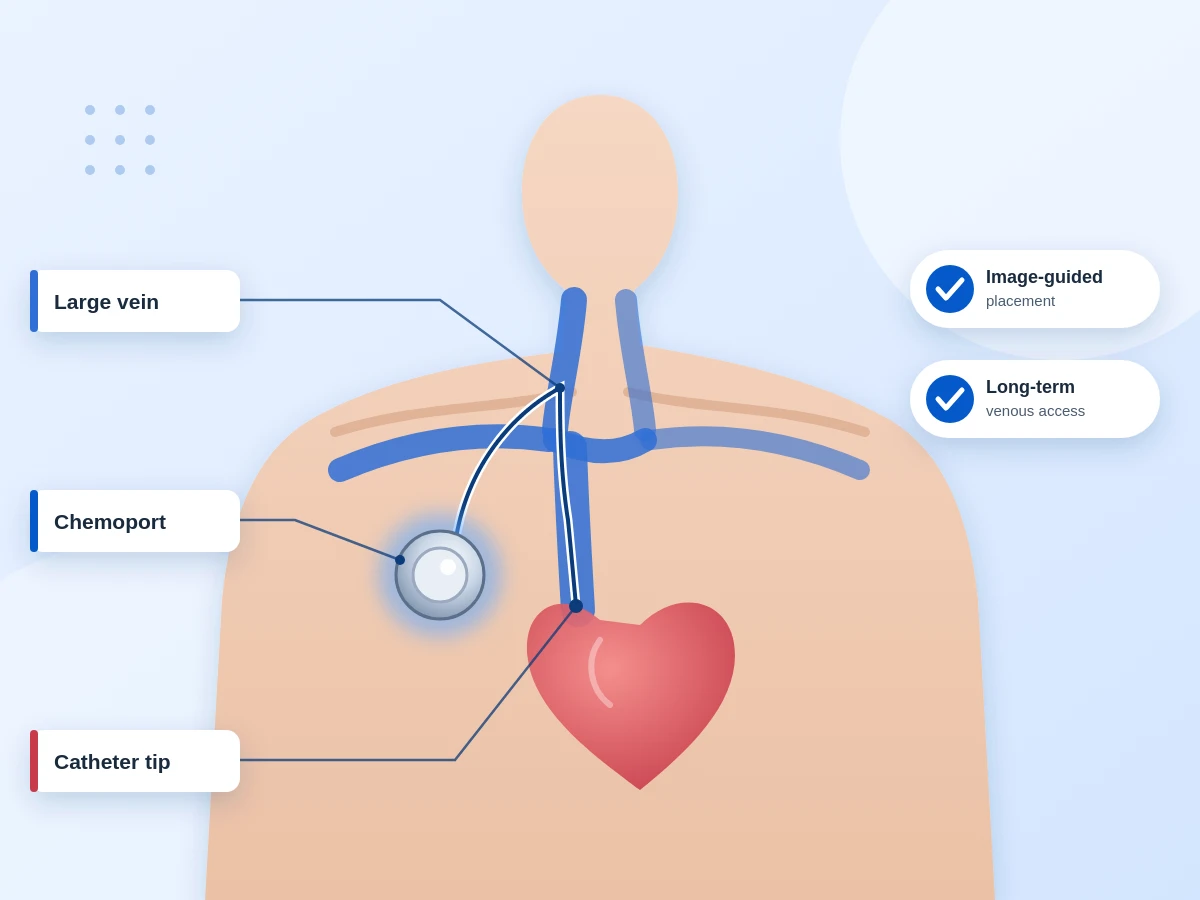
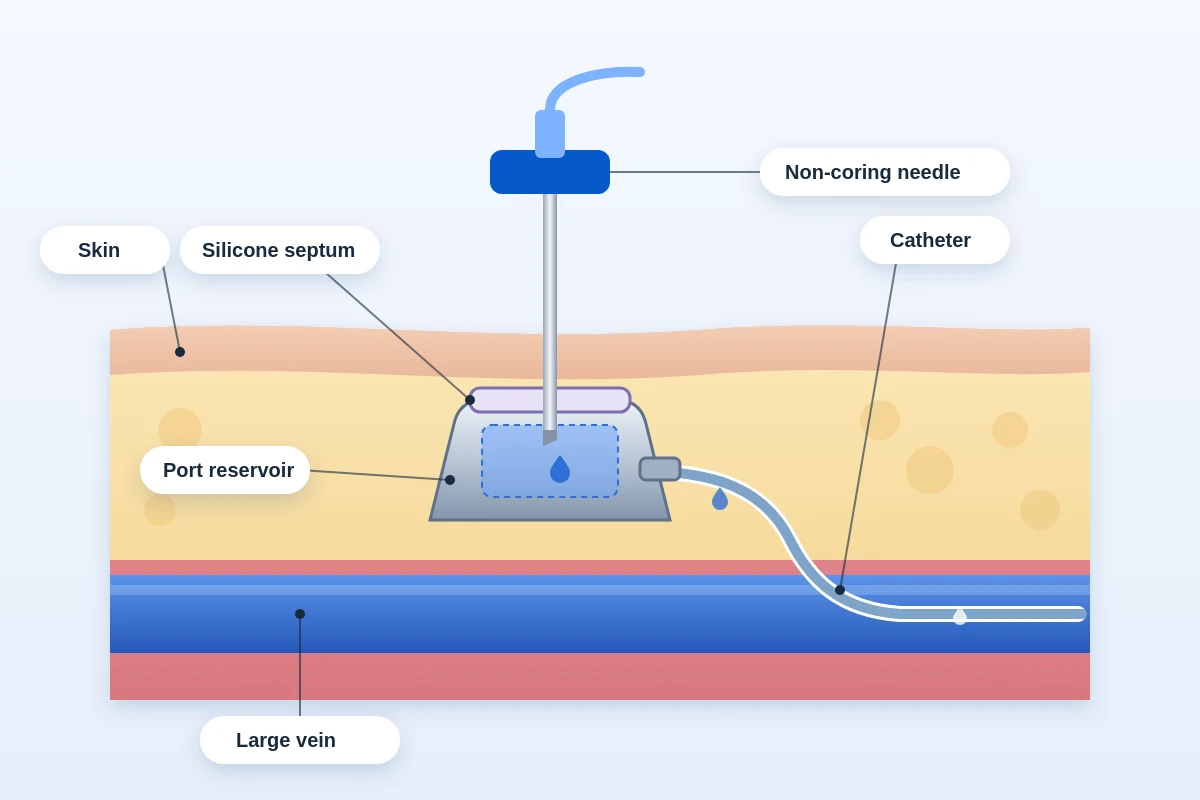
Chemoports (also known as intravenous access ports) are tiny devices that are inserted under your skin. They are linked to a catheter that penetrates into a large vein. Medicines can then be administered repeatedly without the need for re-inserting a new vein every time.
What Makes Chemo Through IV Harder Over Time?
Repeated chemotherapy can make the peripheral veins difficult to access, and receiving chemo through IV cycle after cycle becomes harder. Some cancer treatments also need reliable access to a larger vein. This is where chemoport insertion helps, by giving you a dependable route for your treatment cycles.
What Does “Image-Guided” Chemoport Insertion Mean?
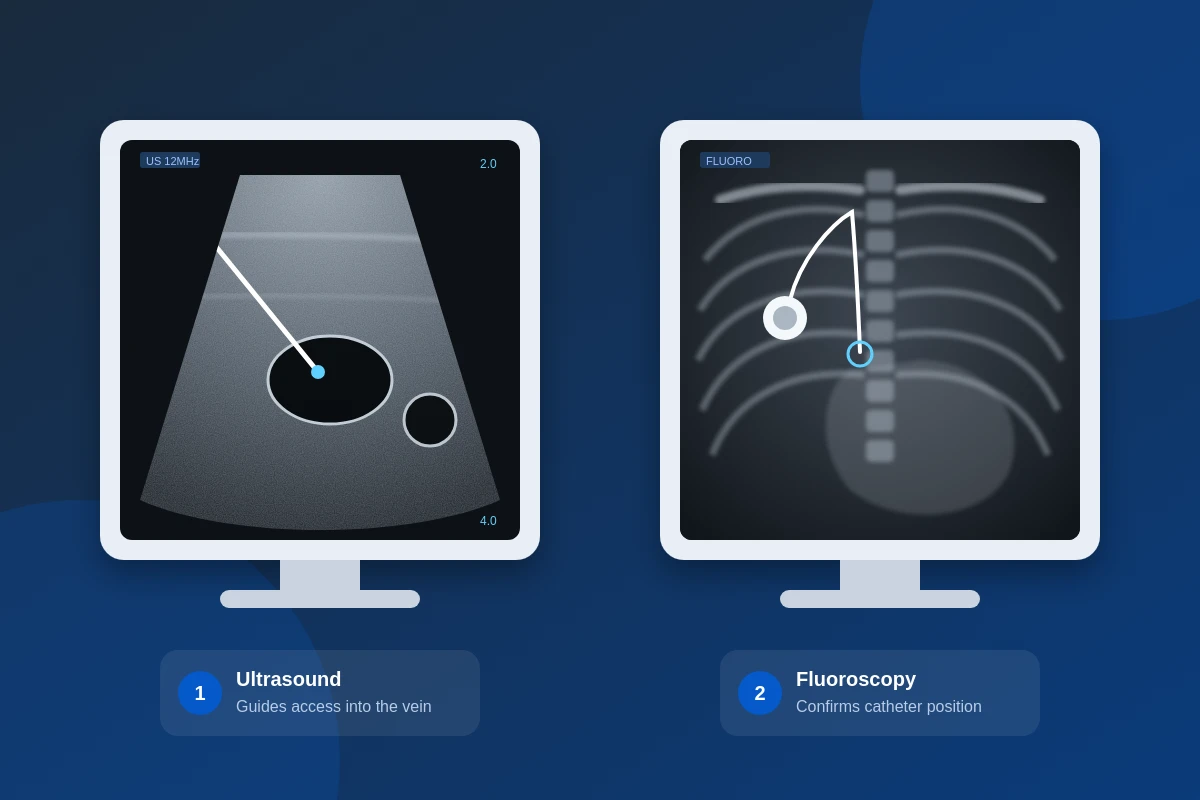
The doctor uses ultrasound and fluoroscopy (X-ray) guidance to place the catheter accurately into the appropriate vein and to position the port safely. Because of this, chemoport insertion is done through small incisions and punctures rather than a large surgical approach.
Who May Benefit
Is a Chemoport Something to Discuss With Your Oncologist?
A chemoport may be recommended for a cancer patient who requires multiple or prolonged intravenous chemotherapy infusions. If you’ve had any of the following, it’s worth talking to your oncologist:
Multiple treatments required
Several treatment cycles are needed, and long-term venous access would be helpful.
Recalcitrant veins
Peripheral veins are not easy to access because of repeated chemotherapy.
Access to a larger vein required
You need access to a larger vein to treat you.
Choosing the Site
Chest Port or Arm Port: Which One Suits You?
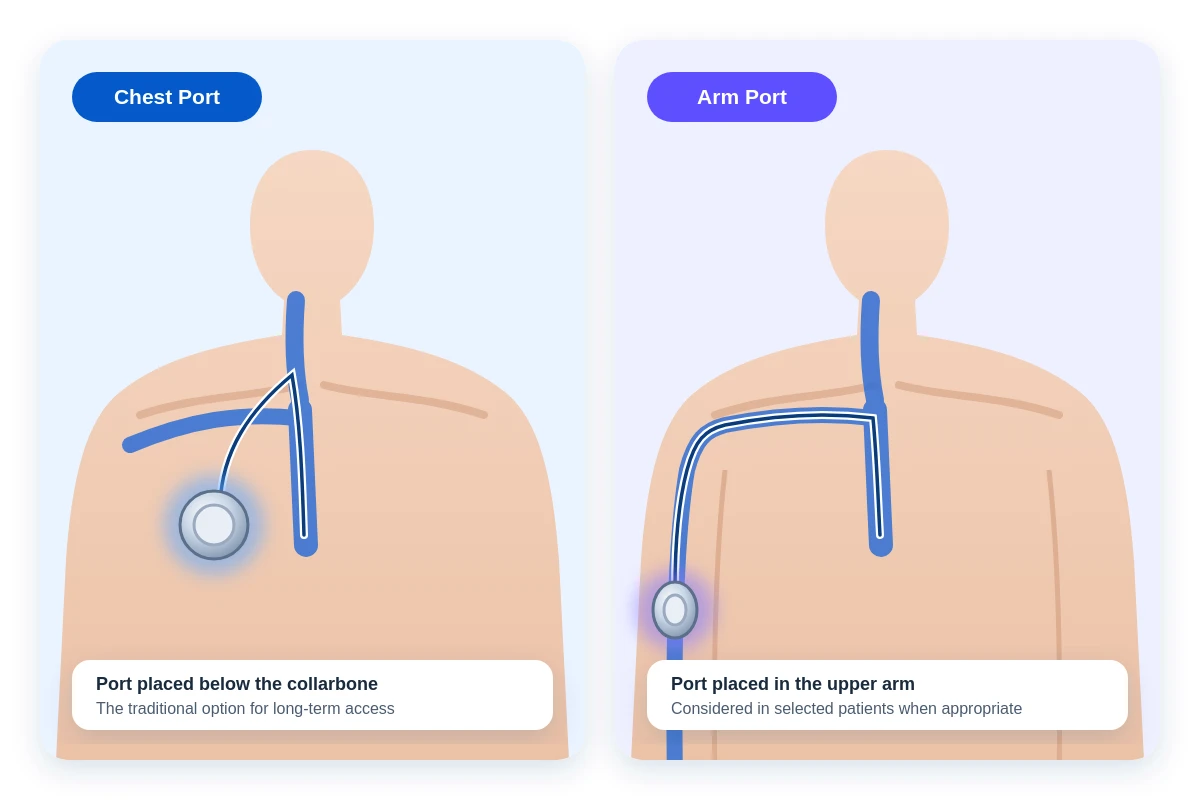
A traditional chest port is one option. In selected patients, chemoport insertion can also be done as a peripherally inserted arm port, where the port sits in the upper arm, and the catheter travels through the vein to its proper central position. Both are forms of implantable venous access, and an arm port is considered only when it is clinically appropriate.
What Decides the Right Site?
Treatment plan
The type and duration of your treatment matter, along with the requirements of your treating team.
Veins and past procedures
Your available veins, any previous catheter procedures and your risk of infection are considered.
Anatomy and lifestyle
Your body habitus, lifestyle and personal preference also count.
Specialist Care
Why Choose an Interventional Radiologist for Chemoport Insertion?
Interventional radiologists specialise in image-guided, minimally invasive procedures. With ultrasound and fluoroscopy, venous access and catheter position can be controlled precisely during chemoport insertion.
Step by Step
What Happens During the Chemoport Insertion Procedure?
The chemoport insertion procedure has three main parts:
Numbing and vein access
Under local anaesthesia, the vein is accessed with ultrasound guidance. Additional sedation is used when appropriate.
Catheter placement
The catheter is carefully advanced into the central venous system, and its position is confirmed with imaging.
Port placement
The port reservoir is placed under the skin and connected to the catheter.
Key Benefits
What Do You Get From Image-Guided Chemoport Insertion?
Minimally invasive
Image-guided chemoport insertion needs only a small incision.
Local anaesthesia
It is used in appropriate patients.
Reliable access
You get dependable long-term venous access for your treatment.
How Soon Can You Get Back to Your Routine After Chemoport Insertion?
Most patients can return to routine activities relatively quickly after chemoport insertion.
Will There Be Any Soreness?
Some soreness can occur after the procedure. The exact recovery period depends on the individual and the type of port placed.
How the Port Helps With Each Chemotherapy Injection
- Easier sessions: Your oncology team can access the port for each subsequent treatment, which makes every chemotherapy injection easier to give.
- Fewer needle attempts: You avoid repeated peripheral needle attempts, which is convenient when you need multiple treatment cycles.
Ready to Make Your Chemotherapy Easier?
If you or a family member needs repeated or long-term intravenous treatment, speak to us about whether a chemoport is right for you. At Dr Gangwani’s Vascular Clinic in Borivali West, Mumbai, Dr Gaurav Gangwani can guide you on chemoport insertion.
Book a consultation today and find out if a chemoport can make your treatment easier.
FAQs
Common Questions About Chemoports
Is chemoport insertion painful?
Chemoport insertion is performed under local anaesthesia, so the area is numbed, and additional sedation is used when appropriate. Some soreness can occur after the procedure.
How long does a chemoport remain in place?
It can remain in place as long as it is necessary, as long as it is working and not creating any issues that need to be removed.
Should all cancer patients have chemoports?
No. This will depend on the treatment you are receiving, its duration, the accessibility of your veins, and the treatment strategy agreed on by your oncology team.
Prime Services
Other Services
Contact Us
Address
Dr. Gangwani Vascular Clinic, 302/TGN SQUARE 3rd floor Chandawarkar lane Borivali west Mumbai 400092
Contact Number
+91 9326195964
Customer Care
drgauravgangwani@gmail.com
Meeting Hours & Video Consultation Timing
Monday to Saturday: 8.30 am to 8.00 pm. For any quires & assistance please call on: +91 9082394787
Copyright 2026 – www.drgauravgangwani.com
Website Managed by SEO Discovery