

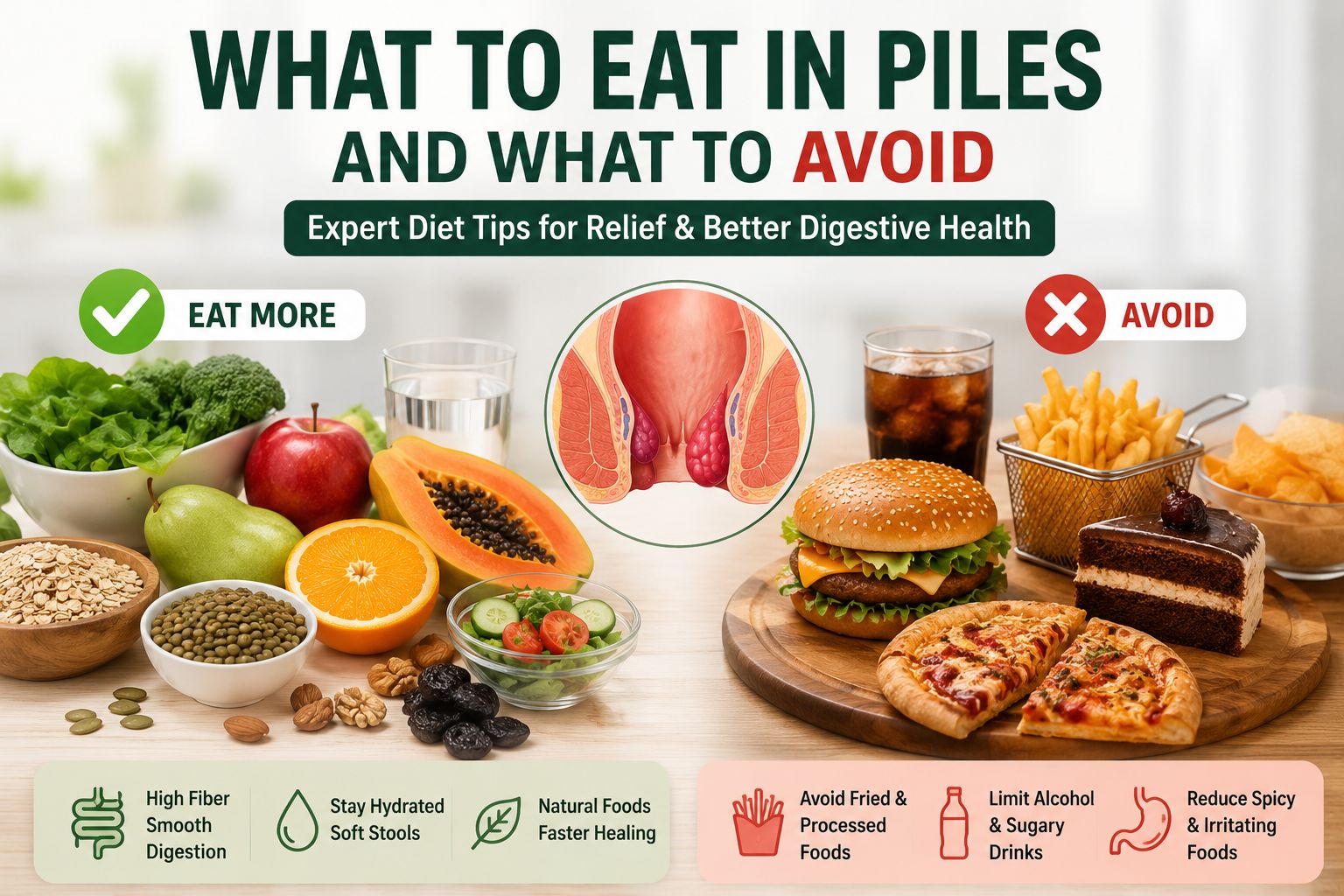
If you have piles, the best way to reduce discomfort is to eat more fiber-rich foods, drink plenty of water, and avoid foods that cause constipation. A healthy diet helps soften stools, reduces straining during bowel movements, and supports faster healing.
Living with piles can make even simple daily activities uncomfortable. Many people look for medicines first, but what you eat can have just as much impact on your recovery.
A healthy diet can help soften stools, reduce constipation, and prevent extra pressure during bowel movements, which are all important for managing piles.
In this guide, you’ll learn what to eat with piles, which foods to avoid, and simple diet tips that can help ease symptoms and support better digestive health.
Piles, also known as hemorrhoids, are swollen veins in the lower rectum or around the anus. They can cause pain, itching, swelling, discomfort, and sometimes bleeding during bowel movements.
Many people focus only on medicines, but diet is just as important. The food you eat directly affects your digestion. If your stools are hard, you need to strain while passing them. This extra pressure can make piles worse and slow the healing process.
The right diet helps keep bowel movements regular, reduces pressure on the affected area, and lowers the chances of future flare-ups. Even small changes in your daily meals can make a noticeable difference over time.
Fiber is one of the most important nutrients for digestive health. It adds bulk to stools while also helping them stay soft and easy to pass.
When stools move through the digestive system smoothly, there is less strain during bowel movements. This reduces pressure on the swollen veins and helps relieve discomfort.
Experts generally recommend that adults consume 25 to 35 grams of fiber every day.
There are 2 types of fiber, and both are beneficial.
This type absorbs water and forms a soft gel inside the intestines.
Good sources include:
This type adds bulk to the stool and helps it move through the digestive tract.
Good sources include:
If you are not used to eating fiber, increase it gradually over several days. Suddenly eating too much fiber may cause gas or bloating.
Choosing natural, high-fiber foods every day can improve digestion and reduce constipation.
Fruits contain fiber, vitamins, antioxidants, and plenty of water.
Some of the best options include:
Prunes and papaya are especially helpful for people who often experience constipation.
Vegetables are packed with fiber while being low in calories.
Include vegetables such as:
Aim to fill at least half your plate with vegetables during lunch and dinner.
Refined grains lose much of their fiber during processing. Whole grains are a healthier choice because they support better digestion.
Choose:
These foods also help you stay full for longer.
Legumes are excellent sources of fiber and plant-based protein.
Good options include:
Adding them to soups, salads, or curries is an easy way to increase daily fiber intake.
Fiber works best when your body has enough water.
Drink:
Staying hydrated helps prevent hard stools and makes bowel movements easier.
Certain foods can slow digestion or make constipation worse. Some may also irritate the digestive system.
Limit or avoid:
You do not have to eliminate every food forever. The goal is to notice which foods trigger your symptoms and reduce them.
Spicy food does not directly cause piles.
However, it can increase burning, irritation, or discomfort in some people who already have hemorrhoids. If you notice that spicy meals make your symptoms worse, it is better to avoid them until the area has healed.
Everyone’s digestive system is different, so listen to how your body responds.
Preventing constipation is one of the best ways to manage piles.
Make these foods a regular part of your meals:
Regular bowel movements reduce pressure on the rectal veins and lower the risk of recurring piles.
Following a balanced meal plan makes healthy eating easier.
Keep portions moderate and avoid skipping meals.
Diet works even better when combined with healthy daily habits.
Follow these simple tips:
These habits improve digestion and reduce pressure on the veins around the rectum.
Many mild cases of piles improve with diet and lifestyle changes. However, medical attention is important if you notice any of these signs.
Ignoring ongoing symptoms can delay recovery and increase the risk of complications. Dr. Gangwani’s Vascular Clinic offers expert evaluation and treatment, while Dr. Gaurav Gangwani provides personalized care for lasting relief.
Managing piles is not only about medicines. Eating more fiber-rich foods, fruits, vegetables, and whole grains while drinking enough water can help reduce constipation and make bowel movements easier.
Limiting processed and fried foods may also ease discomfort. If your symptoms do not improve, Dr. Gangwani’s Vascular Clinic offers expert evaluation, and Dr. Gaurav Gangwani can recommend the right treatment for lasting relief.
1. Which foods are best for piles?
Fiber-rich foods like fruits, vegetables, whole grains, beans, and lentils are among the best choices because they soften stools and reduce constipation.
2. What foods should I avoid if I have piles?
Try to avoid fried foods, processed snacks, refined flour products, excessive red meat, alcohol, and foods that worsen your symptoms.
3. Is drinking more water helpful for piles?
Yes. Drinking enough water keeps stools soft, supports digestion, and helps fiber work effectively.
4. Can diet alone cure piles?
Diet can greatly improve mild piles and prevent constipation, but moderate or severe piles may require medical treatment along with dietary changes.
5. When should I visit Dr. Gangwani’s Vascular Clinic?
You should seek medical advice if you have persistent bleeding, severe pain, recurring piles, or symptoms that do not improve after making diet and lifestyle changes.
Dr. Gangwani Vascular Clinic, 302/TGN SQUARE 3rd floor Chandawarkar lane Borivali west Mumbai 400092
+91 9326195964
drgauravgangwani@gmail.com
Monday to Saturday: 8.30 am to 8.00 pm. For any quires & assistance please call on: +91 9082394787
Copyright 2026 – www.drgauravgangwani.com
Website Managed by SEO Discovery
WhatsApp us