

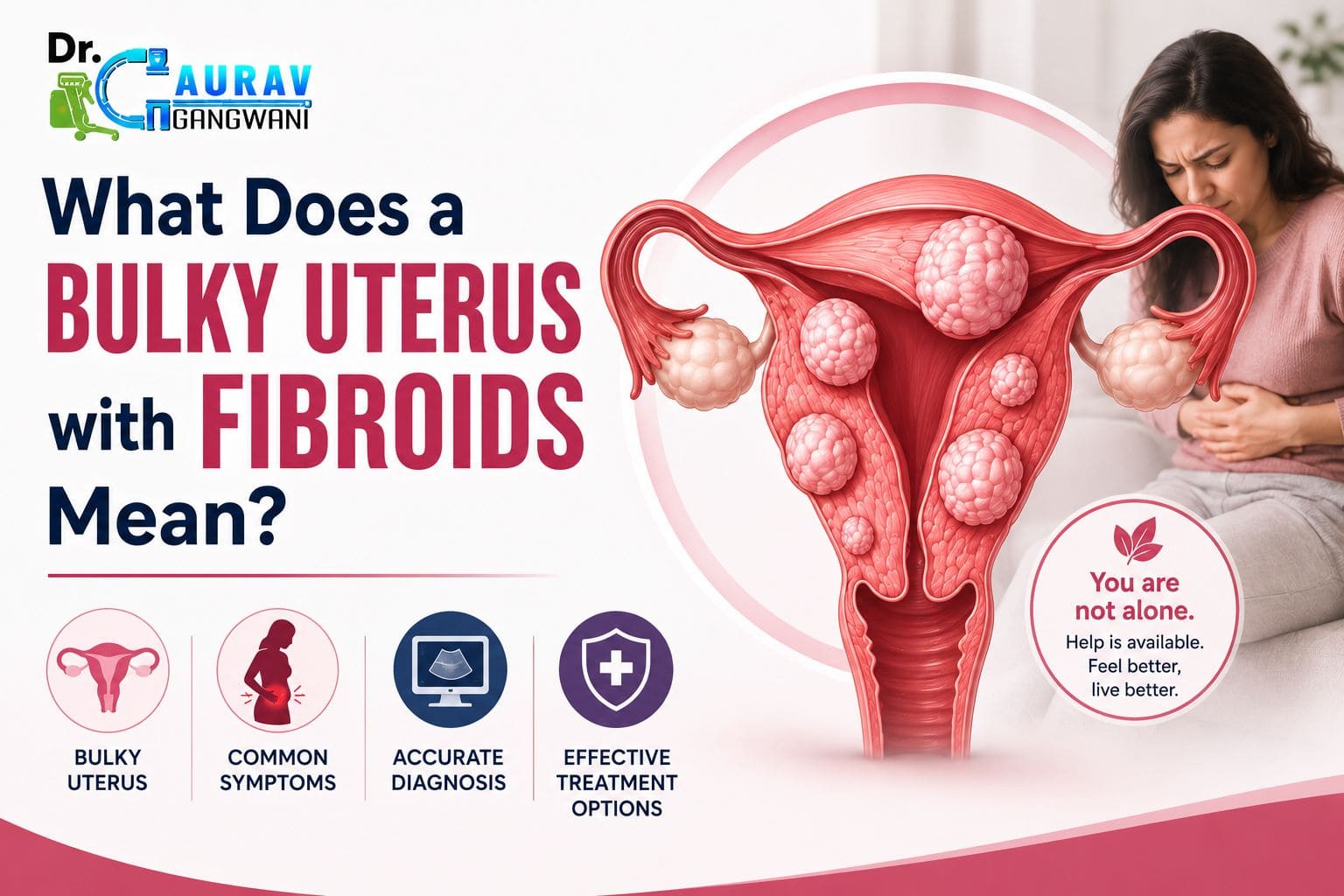
Hearing that you have a bulky uterus with fibroids can feel worrying, but it does not always mean something serious. In many cases, fibroids are non-cancerous growths that can be treated or managed depending on their size, symptoms, and location.
The first step is getting the right diagnosis and discussing the best treatment plan with an experienced gynecologist.
At Dr. Gangwani’s Vascular Clinic, patients receive proper evaluation and personalized care to understand the cause of their symptoms and choose the most suitable treatment.
A bulky uterus simply means that the uterus is larger than its normal size. This is not a disease by itself. Instead, it is a finding that doctors often notice during a pelvic examination or an ultrasound.
A uterus may become bulky for several reasons, including hormonal changes, pregnancy, adenomyosis, or fibroids. Among these, uterine fibroids are one of the most common causes. When a doctor says you have a bulky uterus with fibroids, it means the fibroids have increased the overall size of the uterus.
Fibroids are non-cancerous growths that develop from the muscle tissue of the uterus. They can grow inside the uterus, within the uterine wall, or on its outer surface. Many women have fibroids without even knowing it because they may not cause any symptoms.
Fibroids can be:
Note: The size and location of the fibroids often determine whether they will cause noticeable symptoms.
Many women also wonder what size fibroid is considered dangerous, especially when the uterus begins enlarging significantly.
Fibroids are made of muscle and fibrous tissue. As they grow, they take up space inside or around the uterus. This can make the uterus:
A single large fibroid or several small fibroids clustering together can cause the uterus to appear distinctly bulky on an ultrasound.
Some women have no symptoms at all, while others may experience symptoms that significantly affect daily life. Common signs include:
Watch Out: If bleeding becomes heavy over time, it may also lead to anemia, causing persistent tiredness and weakness.
Fibroids are very common during the reproductive years. Certain factors can increase the chances of developing them, including:
Having one or more of these factors does not guarantee that you will develop fibroids, but it may increase your overall risk.
Doctors usually begin by discussing your symptoms and medical history. They may recommend one or more tests to confirm the diagnosis:
These tests help determine the size, location, and number of fibroids, as well as whether immediate treatment is needed.
No. Not every fibroid needs immediate treatment. If the fibroids are small and do not cause symptoms, your doctor may simply monitor them with regular checkups.
Treatment is usually recommended when fibroids cause:
The right treatment path depends entirely on your age, symptoms, future pregnancy plans, and overall health.
There are several effective ways to manage fibroids today. Your doctor will recommend the option that best fits your condition.
Medicines may help control symptoms such as heavy bleeding or pain. They can also temporarily shrink some fibroids before a planned surgery.
This is a minimally invasive procedure that blocks the blood supply to the fibroids. Without enough blood, the fibroids gradually shrink. Many women prefer this option because:
A myomectomy removes only the fibroids while keeping the uterus intact. This option is frequently recommended for women who wish to have children in the future.
A hysterectomy removes the uterus completely. This permanent solution may be suggested when fibroids are very large, symptoms are severe, or other treatments have not been successful.
Some women with fibroids have completely healthy pregnancies. However, depending on their size and location, fibroids may sometimes lead to complications, such as:
If you are planning a pregnancy, it is important to discuss your fibroids with your gynecologist before trying to conceive.
Do not ignore ongoing symptoms. Seek medical advice if you experience:
Early evaluation helps identify the cause and allows treatment before symptoms become more serious.
While lifestyle changes cannot remove fibroids, they may help support your overall health. Consider these healthy habits alongside your medical care:
A bulky uterus with fibroids is a common condition, and many women successfully manage it with proper medical care. The key is not to ignore symptoms such as heavy bleeding, pelvic pain, or constant pressure.
If you have been diagnosed with fibroids or are experiencing symptoms, consult Dr. Gaurav Gangwani for a detailed evaluation and personalized treatment plan. At Dr. Gangwani’s Vascular Clinic, every patient receives compassionate care and guidance to choose the treatment that best fits their health needs.
Dr. Gangwani Vascular Clinic, 302/TGN SQUARE 3rd floor Chandawarkar lane Borivali west Mumbai 400092
+91 9326195964
drgauravgangwani@gmail.com
Monday to Saturday: 8.30 am to 8.00 pm. For any quires & assistance please call on: +91 9082394787
Copyright 2026 – www.drgauravgangwani.com
Website Managed by SEO Discovery
WhatsApp us