

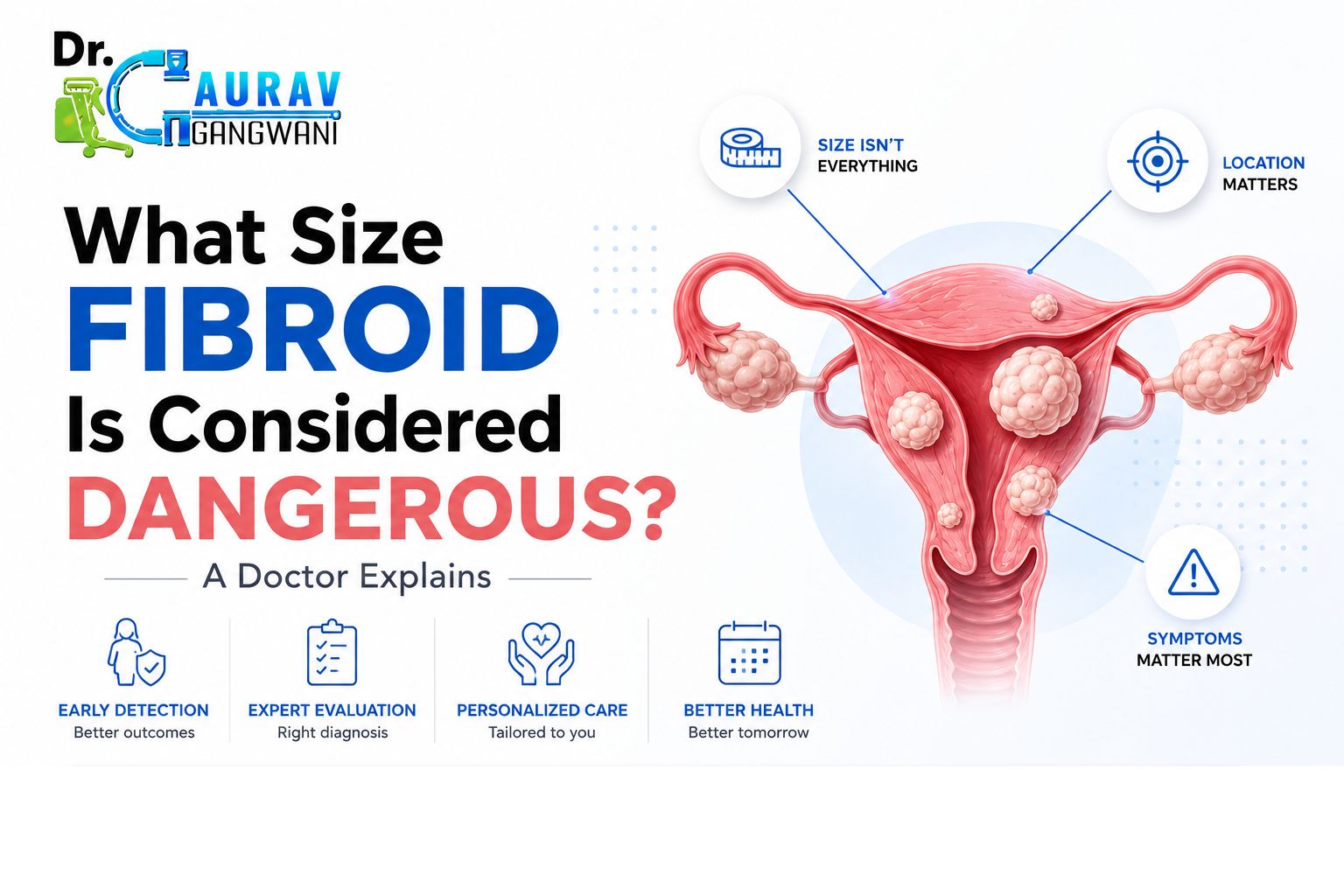
Many women panic after hearing they have a fibroid, especially when they learn its size. The truth is that a fibroid is not considered dangerous based on size alone. Doctors also look at its location, how fast it is growing, and whether it is causing symptoms like heavy bleeding, pain, or fertility problems.
At Dr Gangwani’s Vascular Clinic, every fibroid is carefully evaluated before treatment is recommended. Getting checked early can help you avoid complications and choose the right treatment for fibroids before the condition affects your daily life.
Fibroids are non-cancerous growths that develop in or around the uterus. They are also called uterine fibroids or leiomyomas. These growths are very common, especially in women between the ages of 30 and 50.
Some fibroids stay very small and never cause any problems. Others slowly grow over time and begin putting pressure on nearby organs, leading to uncomfortable symptoms.
Many women don’t even know they have fibroids until they undergo a routine pelvic exam or ultrasound.
The location of the fibroid often matters just as much as its size.
The simple answer is yes—but it isn’t the only thing doctors consider.
A small fibroid can sometimes cause severe symptoms if it grows inside the uterine cavity. On the other hand, a much larger fibroid may cause very few problems if it grows in a less sensitive area.
That is why doctors evaluate several factors before deciding whether treatment is necessary.
| Size Is Important | Doctors Also Check |
| Diameter of the fibroid | Location in the uterus |
| Number of fibroids | Symptoms |
| Growth over time | Age |
| Pressure on nearby organs | Future pregnancy plans |
Every patient is different, so treatment should always be personalized. A specialist approach to uterine fibroid treatment helps doctors evaluate symptoms, fibroid location, fertility goals, and overall health before recommending treatment.
There is no exact measurement that automatically makes a fibroid dangerous. However, as fibroids become larger, they are more likely to cause symptoms and affect nearby organs.
Doctors generally classify fibroids by size to better understand how they may affect the body.
Think of these as being about the size of a pea.
Most small fibroids do not cause noticeable symptoms. They are often discovered during a routine ultrasound or pelvic examination.
✔ No treatment may be needed.
✔ Regular monitoring is often enough.
✔ Many women never experience symptoms.
However, if a small fibroid grows inside the uterine cavity, it can still lead to heavy bleeding or fertility concerns.
Medium-sized fibroids are roughly the size of a plum.
At this stage, some women begin noticing symptoms that interfere with daily life.
Not every woman with a medium-sized fibroid needs treatment. If symptoms are mild, your doctor may simply monitor the fibroid over time.
Large fibroids are much more likely to cause discomfort because they occupy more space inside the pelvis.
As they grow, they can press against nearby organs such as the bladder or bowel.
Fibroids measuring 8 to 10 cm or larger often require a detailed medical evaluation. While they are not automatically dangerous, they are more likely to interfere with everyday activities and reproductive health.
Rather than focusing only on the size of a fibroid, pay attention to the symptoms your body is giving you.
If you experience any of the following, it is important to see a doctor:
These symptoms could mean the fibroid is affecting nearby organs or your reproductive health.
Myth: Only large fibroids need medical treatment.
Fact: Even a fibroid smaller than 2 cm can become a problem if it grows inside the uterine cavity. Small fibroids in this location may lead to heavy bleeding, repeated miscarriages, or difficulty becoming pregnant.
That is why doctors never recommend treatment based on size alone. They always consider the complete picture, including symptoms, location, and future health goals.
There is no single reason why fibroids develop, but researchers believe hormones play a major role.
Estrogen and progesterone, the hormones involved in the menstrual cycle, can encourage fibroids to grow during the reproductive years.
Several factors may increase the chances of fibroid growth, including:
Although you cannot completely prevent fibroids, maintaining a healthy lifestyle and attending regular gynecological checkups may help detect them early.
Not every fibroid affects pregnancy, but larger fibroids or those growing inside the uterus may create challenges before or during pregnancy.
Depending on their size and location, fibroids can make it harder for a fertilized egg to implant or reduce the space available for a growing baby. In some cases, they may also increase the risk of pregnancy complications.
The good news is that many women with fibroids have healthy pregnancies. If you are planning to conceive, it is a good idea to have your fibroids evaluated before pregnancy.
The first step toward effective treatment is finding out exactly where the fibroid is located and how large it has become.
Your doctor may recommend one or more tests to get a clear picture.
Your doctor will ask about:
This information helps determine whether fibroids may be causing your symptoms.
A physical examination helps your doctor check for changes in the size and shape of the uterus.
An ultrasound is the most common imaging test used to confirm fibroids.
It shows:
An MRI may be recommended when larger or multiple fibroids are present or when planning advanced treatment.
It provides a much more detailed view of the uterus.
Once all the information is available, your doctor will recommend the treatment that best matches your symptoms, lifestyle, and future pregnancy plans.
Many women worry that a fibroid diagnosis automatically means surgery. Fortunately, that is not true.
Treatment depends on:
Here are the most common treatment options.
If your fibroid is small and not causing symptoms, your doctor may recommend regular monitoring instead of immediate treatment.
This option is often suitable when:
Regular follow-up appointments help ensure that any changes are detected early.
Medicines cannot permanently remove fibroids, but they can help control symptoms.
Medication may be recommended to:
Your doctor will decide whether medication is appropriate based on your individual condition.
Uterine Fibroid Embolization, also called UFE, is a minimally invasive treatment that blocks the blood supply feeding the fibroid.
Without blood, the fibroid gradually shrinks, and symptoms improve over time.
For many women, UFE offers an effective alternative to traditional surgery.
Surgery may be recommended when fibroids are very large or continue causing severe symptoms despite other treatments.
It may be the right option if:
Your doctor will explain the benefits and risks before recommending surgery.
Lifestyle changes cannot make fibroids disappear, but they can help you feel healthier and may reduce the impact of some symptoms.
These simple habits work best when combined with professional medical care.
Many women ignore heavy periods or pelvic discomfort because they think these symptoms are a normal part of life. They are not.
If your fibroid continues to grow or begins affecting your daily routine, seeking medical advice early can help prevent unnecessary complications. Early diagnosis also gives you more treatment options and may help you avoid major surgery.
At Dr. Gangwani’s Vascular Clinic, every patient receives individualized care based on their symptoms, medical history, and future health goals. Dr. Gaurav Gangwani carefully evaluates the size, location, and behavior of each fibroid before recommending the most suitable treatment.
With the right guidance and timely care, most women can manage fibroids successfully and return to their normal lives with confidence.
A 5 cm fibroid is not automatically dangerous. However, if it causes heavy bleeding, pelvic pain, pressure on nearby organs, or fertility problems, it should be evaluated by a specialist. Treatment depends on your symptoms and overall health, not just the size.
Yes. Some fibroids shrink naturally after menopause because hormone levels decrease. Others may become smaller with medications or minimally invasive procedures like Uterine Fibroid Embolization (UFE). Your doctor can recommend the most appropriate option for your condition.
No. Many fibroids never cause symptoms and only need regular monitoring. Treatment is usually recommended when fibroids cause pain, heavy bleeding, fertility concerns, or begin affecting nearby organs.
The frequency depends on the size of the fibroid and your symptoms. Small fibroids without symptoms may only need periodic ultrasounds, while larger or symptomatic fibroids may require more frequent follow-up appointments.
You should schedule an appointment if you experience heavy menstrual bleeding, persistent pelvic pain, abdominal swelling, frequent urination, constipation, or fertility concerns. An early evaluation can help identify the best treatment option before the fibroid grows larger or causes additional complications.
Dr. Gangwani Vascular Clinic, 302/TGN SQUARE 3rd floor Chandawarkar lane Borivali west Mumbai 400092
+91 9326195964
drgauravgangwani@gmail.com
Monday to Saturday: 8.30 am to 8.00 pm. For any quires & assistance please call on: +91 9082394787
Copyright 2026 – www.drgauravgangwani.com
Website Managed by SEO Discovery
WhatsApp us