
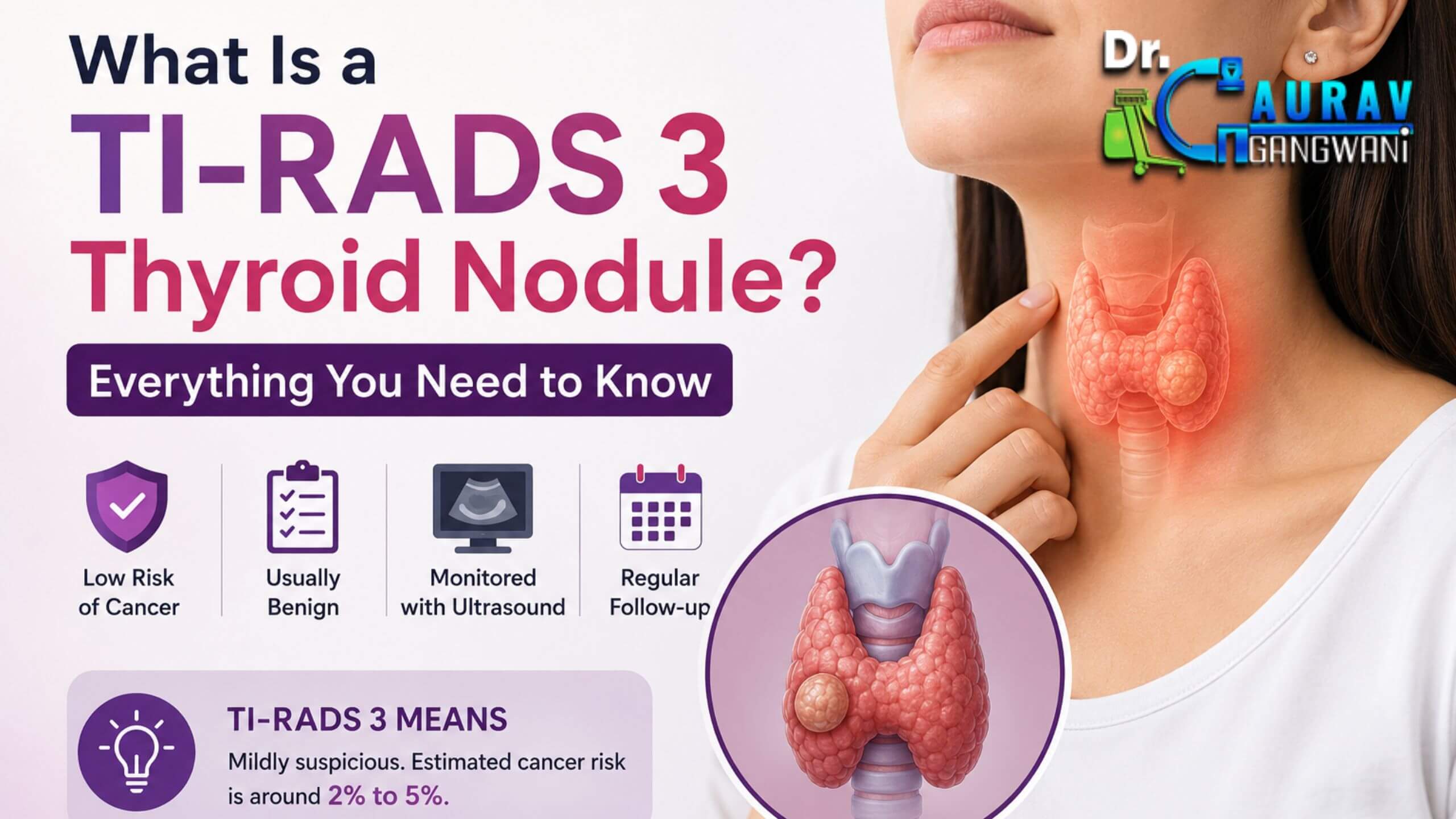
A TI-RADS 3 thyroid nodule is a thyroid lump that has a low risk of being cancerous. Most TI-RADS 3 nodules are benign and only need regular ultrasound monitoring. In some cases, your doctor may recommend a biopsy if the nodule is large or shows changes over time. Early evaluation and routine follow-ups help ensure the right treatment if needed.
A TI-RADS 3 nodule is considered mildly suspicious, which means the ultrasound has found a few features that need observation but do not strongly suggest cancer.
The good news is that most TI-RADS 3 nodules are benign. The estimated risk of cancer is generally around 2% to 5%, making this one of the lower-risk categories in the TI-RADS system.
Receiving this result does not automatically mean you need surgery or a biopsy. In many cases, your doctor will simply recommend routine ultrasound follow-ups to make sure the nodule remains stable. The decision is always based on the nodule’s size, appearance, symptoms, and your overall health.
Doctors use a thyroid ultrasound to closely examine the nodule. During the scan, the radiologist evaluates several features that help determine the TI-RADS score.
These include:
Each feature receives a certain number of points. The total score places the nodule into a TI-RADS category ranging from low to high suspicion.
A TI-RADS 3 score means the ultrasound shows only a few mildly suspicious features, so the chance of cancer remains low. This standardized system helps doctors make more accurate decisions about monitoring and treatment.
Thyroid nodules are very common, especially in adults. Many people have them without even realizing it because they often cause no symptoms.
Some common causes include:
In many cases, there is no single identifiable cause. Fortunately, most thyroid nodules are not cancerous. A proper medical evaluation and ultrasound help determine whether further testing is necessary.
Many TI-RADS 3 thyroid nodules do not cause any noticeable symptoms. They are often discovered during an ultrasound performed for another medical reason or during a routine health examination.
When symptoms do occur, they may include:
Most small nodules do not affect thyroid hormone production. However, your doctor may recommend blood tests to check whether your thyroid gland is functioning normally. If symptoms become worse or the nodule grows, additional evaluation may be recommended.
A TI-RADS 3 nodule does not automatically require a biopsy. Doctors follow established medical guidelines before recommending this procedure.
Several factors are considered, including:
If the nodule is small and remains stable, regular ultrasound monitoring is usually enough. If it reaches the recommended size or develops more suspicious features, your doctor may suggest a fine-needle aspiration biopsy to collect a small sample for laboratory testing.
Although the possibility exists, it is uncommon. Most TI-RADS 3 nodules remain benign and do not develop into thyroid cancer.
Doctors recommend regular follow-up because thyroid nodules can change slowly over time. Monitoring allows any increase in size or changes in ultrasound features to be detected early.
Early detection helps doctors decide whether additional testing or treatment is needed. Keeping your scheduled follow-up appointments is one of the most important steps you can take to protect your thyroid health.
Treatment depends on the size of the nodule, your symptoms, ultrasound findings, and overall health. Every patient receives an individualized treatment plan based on these factors.
Possible treatment options include:
Most TI-RADS 3 nodules only require periodic ultrasound examinations to check for changes in size or appearance. This is the most common approach.
If the nodule becomes large enough or develops suspicious features, your doctor may recommend a biopsy to determine whether the cells are benign.
If thyroid hormone levels are abnormal or another thyroid condition is present, medication may be prescribed to manage the underlying problem.
Surgery is usually considered only when the nodule is confirmed to be cancerous, causes significant symptoms, continues to grow rapidly, or creates pressure on nearby structures. Most TI-RADS 3 nodules never require surgery.
Although thyroid nodules cannot always be prevented, healthy habits and regular medical care can help you manage them effectively.
Understanding your diagnosis can reduce unnecessary anxiety and help you make informed healthcare decisions. With proper monitoring, most TI-RADS 3 thyroid nodules remain harmless and do not interfere with daily life.
No. Most TI-RADS 3 thyroid nodules are benign. The risk of cancer is generally low, and many only require routine ultrasound monitoring.
No. A biopsy is usually recommended only if the nodule reaches a certain size or develops concerning features during follow-up.
Some nodules remain unchanged for years, while others may shrink or change over time. Regular ultrasound helps monitor these changes.
The schedule varies based on your doctor’s assessment, but many patients have repeat ultrasounds every one to three years.
You should seek medical evaluation if your ultrasound identifies a thyroid nodule, if the lump grows, causes swallowing difficulty, or if you need expert guidance on follow-up or treatment options.
Dr. Gangwani Vascular Clinic, 302/TGN SQUARE 3rd floor Chandawarkar lane Borivali west Mumbai 400092
+91 9326195964
drgauravgangwani@gmail.com
Monday to Saturday: 8.30 am to 8.00 pm. For any quires & assistance please call on: +91 9082394787
Copyright 2026 – www.drgauravgangwani.com
Website Managed by SEO Discovery
WhatsApp us