

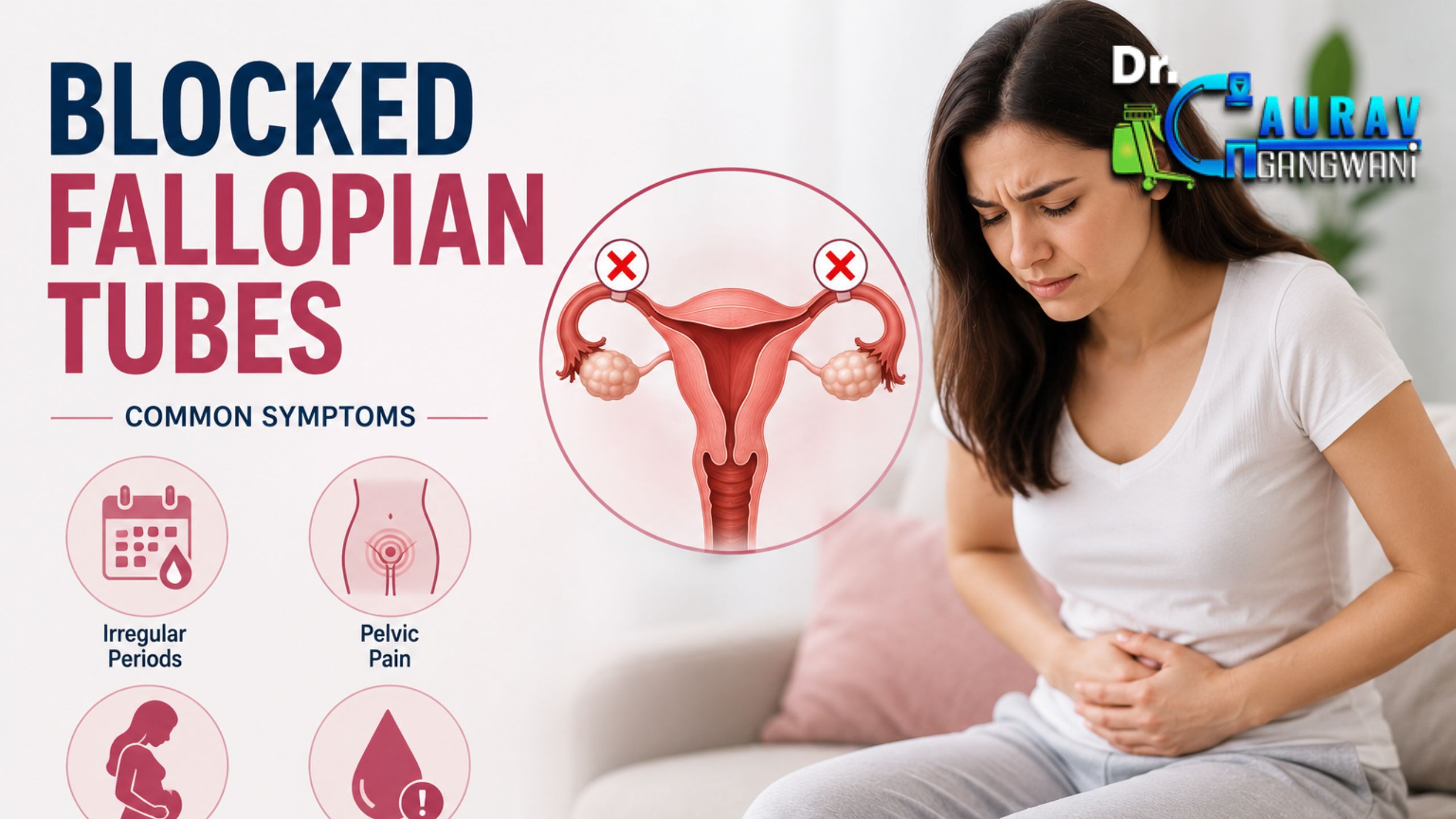
Many women believe they would notice if something were wrong with their reproductive health, but blocked fallopian tubes often develop without obvious symptoms.
For some, the first sign is difficulty getting pregnant, while others may experience pelvic pain or changes in their menstrual cycle without realizing the cause. The good news is that early diagnosis and the right treatment can help protect fertility.
In this guide, you’ll learn the common symptoms, causes, diagnosis, treatment options, and when to see a specialist.
The fallopian tubes are two narrow tubes that connect the ovaries to the uterus and play an important role in pregnancy. After ovulation, an egg travels through a fallopian tube, where it can be fertilized by sperm before moving into the uterus.
If one or both tubes are blocked, this process is disrupted, making it harder to conceive.
While some women can still become pregnant if only one tube is healthy, blockage in both tubes often requires medical evaluation and treatment.
Many women have no symptoms at all. In fact, blocked fallopian tubes are often discovered during fertility testing. However, some women experience signs that should not be ignored.
This is the most common symptom.
If you’ve been trying to conceive for several months without success, your doctor may recommend checking whether your fallopian tubes are open.
Since fertilization takes place inside the fallopian tubes, even a partial blockage can make pregnancy more difficult.
Difficulty conceiving can happen for many reasons, but blocked tubes are one possible cause that should always be evaluated.
Some women experience pain or discomfort in the lower abdomen or pelvis.
The pain may:
Pain is more common when the blockage is caused by infection, inflammation, or fluid collecting inside the tube.
Blocked fallopian tubes themselves may not always cause painful periods, but the conditions that lead to the blockage often do.
Women with endometriosis or pelvic inflammatory disease may experience:
If your periods have become much more painful than they used to be, it’s a good idea to discuss it with your doctor.
Pain during intercourse may occur when scar tissue, pelvic inflammation, or endometriosis affects the reproductive organs.
You may notice:
Although this symptom has many possible causes, it should always be medically evaluated.
Some infections that later lead to blocked fallopian tubes can also change vaginal discharge.
Watch for symptoms such as:
Treating infections early may help reduce the risk of long-term damage.
Not every woman experiences severe pain.
Instead, some notice ongoing discomfort that slowly becomes part of daily life.
This may include:
Because these symptoms are often mistaken for menstrual discomfort or digestive problems, many women delay seeking medical advice.
Yes.
This is actually very common.
Many women have completely blocked tubes without experiencing pain or any noticeable symptoms. They often discover the condition only after fertility testing when pregnancy does not happen as expected.
Because there may be no warning signs, regular gynecological checkups and early fertility evaluations are important, especially if you’ve been trying to conceive without success.
Several conditions can damage the fallopian tubes over time. Some happen gradually, while others develop after infections or surgery.
Common causes include:
Each cause affects the tubes differently, which is why identifying the exact reason for the blockage is important before deciding on treatment.
Your doctor will review your symptoms, medical history, and fertility goals before recommending diagnostic tests.
Common tests include:
This is one of the most common tests.
During the procedure:
A specialized ultrasound may help identify fluid-filled fallopian tubes or other pelvic conditions that may be contributing to infertility.
Laparoscopy is a minimally invasive procedure that allows the doctor to examine the uterus, ovaries, and fallopian tubes directly.
It can help diagnose:
Since infertility can have multiple causes, your doctor may recommend additional fertility tests to evaluate hormone levels, ovulation, and your partner’s fertility as well.
Treatment depends on:
Common treatment options include:
If an active infection is present, antibiotics may treat the infection and prevent further damage.
However, medications cannot remove scar tissue that has already formed.
Minimally invasive surgery may be recommended to:
Recovery is usually quicker than traditional surgery because only small incisions are made.
If both tubes are severely damaged or surgery is unlikely to improve fertility, IVF may offer the best chance of pregnancy.
Because IVF bypasses the fallopian tubes, fertilization occurs in the laboratory before the embryo is transferred directly into the uterus.
Your doctor will recommend the treatment option that best fits your individual condition.
Don’t ignore persistent symptoms. Early diagnosis can help prevent complications and improve treatment outcomes.
Although not every case can be prevented, healthy habits can reduce your risk of developing conditions that may damage the fallopian tubes.
You can protect your reproductive health by:
Taking action early can make a meaningful difference in protecting your fertility and overall reproductive health.
If you’re experiencing ongoing symptoms or difficulty conceiving, consulting Dr. Gaurav Gangwani at Dr. Gangwani’s Vascular Clinic can help you receive an accurate diagnosis and discuss the most appropriate treatment options.
1. Can you have blocked fallopian tubes without any symptoms?
Yes. Many women have no symptoms at all. The condition is often discovered during fertility testing when pregnancy does not occur as expected.
2. What is the first symptom of blocked fallopian tubes?
For most women, the first noticeable sign is difficulty getting pregnant. Some may also experience pelvic pain or painful periods.
3. Can blocked fallopian tubes cause pelvic pain?
Yes. Depending on the underlying cause, blocked tubes may lead to ongoing pelvic pain, lower abdominal discomfort, or pain during menstruation or intercourse.
4. How are blocked fallopian tubes diagnosed at Dr. Gangwani’s Vascular Clinic?
Doctors may recommend imaging tests such as HSG, ultrasound, or laparoscopy after reviewing your symptoms and medical history to determine whether the tubes are blocked.
5. Can blocked fallopian tubes be treated?
Yes. Treatment depends on the cause and severity of the blockage. Options may include medication, laparoscopic surgery, or IVF to improve the chances of pregnancy.
Dr. Gangwani Vascular Clinic, 302/TGN SQUARE 3rd floor Chandawarkar lane Borivali west Mumbai 400092
+91 9326195964
drgauravgangwani@gmail.com
Monday to Saturday: 8.30 am to 8.00 pm. For any quires & assistance please call on: +91 9082394787
Copyright 2026 – www.drgauravgangwani.com
Website Managed by SEO Discovery
WhatsApp us