

The first steps out of bed can be the hardest part of the day when you have heel pain. The sole feels tight, and a sharp ache sits under the heel until the foot loosens up. Plantar fasciitis is a common cause, linked to approximately 1 million patient visits a year in the United States.
This guide covers five gentle exercises, how to do them properly and how to tell when something isn’t working. It can’t promise recovery, and heel pain has other causes, so treat it as a starting point rather than a diagnosis.
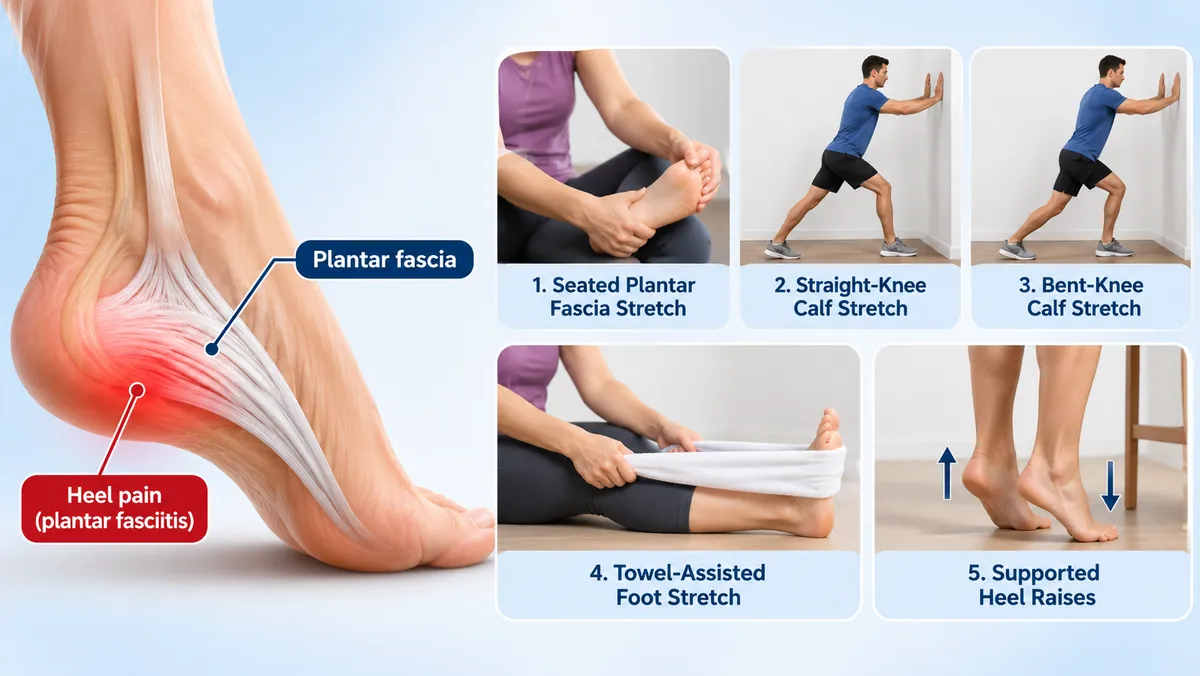
The plantar fascia is a thick band of tissue running from the heel bone to the toes.
Stretching the fascia and calf, then building strength, aims to reduce strain on it over time. Calf and fascia stretches are not interchangeable, since a tight calf pulls on the heel while the fascia stretch works on the band itself.
Pulling the toes back tightens the fascia directly. The common mistake is pulling the whole ankle upwards, which mostly stretches the calf. If you get first-step pain, doing this before you stand up in the morning may help.
Stand facing a wall, hands on it at chest height. Step the affected leg back, keep that knee straight and press the heel into the floor. Lean forward gently until you feel a stretch in the upper calf.
A common reference is a 30-second hold repeated three times, though this is a starting point, not a fixed prescription. Watch for a lifting heel or a foot turning outwards.
Stay in the same position, then soften the back knee slightly while keeping the heel down. The stretch shifts lower down the calf, closer to the Achilles tendon, because this version reaches a deeper calf muscle.
Neither version is better for everyone, so many people do both, using the same 30-second hold three times.
Sit with the affected leg out in front and loop a towel around the ball of the foot. Keeping the knee straight, draw the foot gently towards you and hold for 30 seconds, three times.
This suits people who find standing stretches difficult, though it mainly stretches the calf and so isn’t identical to the seated fascia stretch.
Stand beside a stable counter with your fingertips resting on it. Rise onto your toes slowly, pause, then lower the heels over about three seconds. A starting point might be 8 to 10 repetitions every other day, adding a few at a time.
If ordinary walking is already quite painful, use a smaller lift or get professional guidance before adding load.
A realistic starting routine might be the seated stretch a few times a day, calf stretches once or twice a day and heel raises every other day. These are not fixed rules, and not every exercise needs the same frequency.
Check how your heel feels later in the day and the next morning. A mild pulling sensation during a stretch is normal, but if the next morning is clearly worse, reduce the repetitions, range or load.
Complete rest isn’t right for everyone. Sudden jumps in walking, running or time on your feet tend to aggravate symptoms, as can unsupportive shoes. For temporary comfort, gently roll the sole over a bottle or use an ice pack wrapped in a cloth for 10 to 15 minutes, though neither replaces rehabilitation.
Common mistakes include:
See a doctor promptly if you have:
Good technique, steady practice and gradual progrxxession matter more than doing a lot at once. If symptoms linger or you’re unsure where to start, we offer help to people with persistent heel pain at our clinic and can help work out the cause and the next step.
No single exercise suits everyone. The seated fascia stretch targets the band itself, while calf stretches and heel raises address flexibility and strength, so a combination is usually more useful.
It may help if your worst pain comes with the first steps of the day. Pull the toes back before standing, and stop if it causes sharp pain.
Many people start with the fascia stretch several times a day and calf stretches once or twice daily, with heel raises every other day. Adjust to how your heel feels the next morning.
Many people can keep walking, but sudden increases in distance or intensity often make things worse. If running aggravates your pain, cut back and return gradually.
Get assessed if the pain is severe, keeps returning or hasn’t eased after several weeks of sensible self-care. Other causes, such as nerve or tendon problems, need different treatment.
Dr. Gangwani Vascular Clinic, 302/TGN SQUARE 3rd floor Chandawarkar lane Borivali west Mumbai 400092
+91 9326195964
drgauravgangwani@gmail.com
Monday to Saturday: 8.30 am to 8.00 pm. For any quires & assistance please call on: +91 9082394787
Copyright 2026 – www.drgauravgangwani.com
Website Managed by SEO Discovery
WhatsApp us