

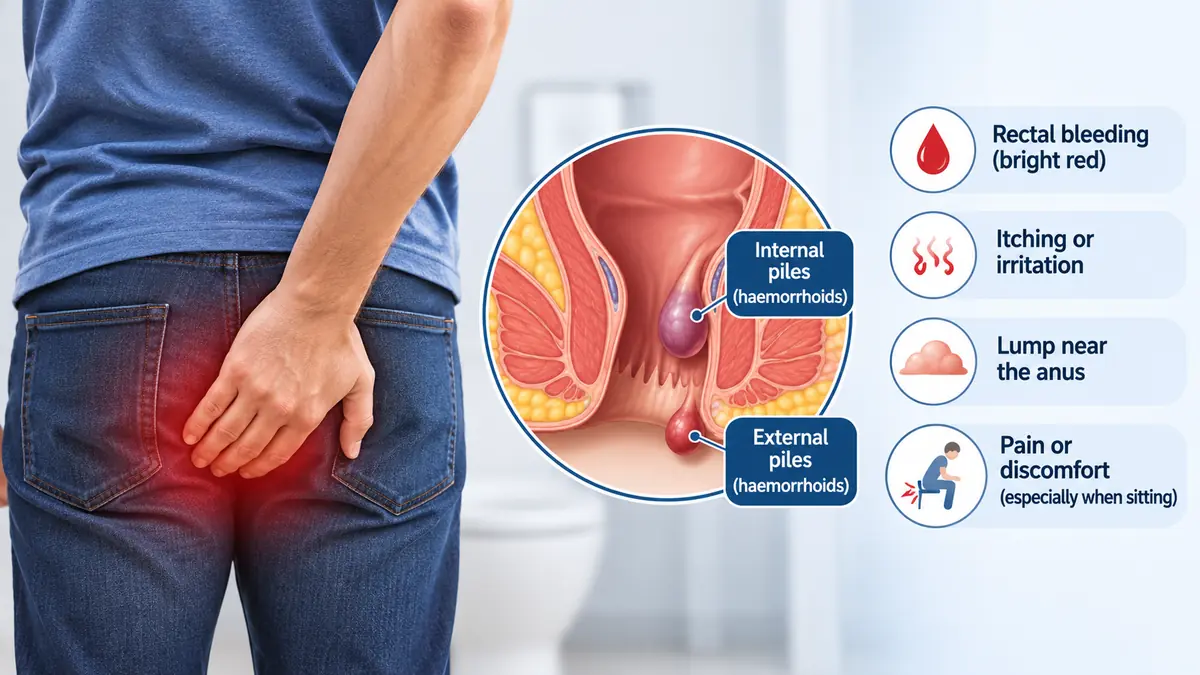
A bit of blood on the toilet paper. An itch that just won’t go away. A small lump that makes sitting uncomfortable. Many men ignore these symptoms, but they are early piles symptoms in male patients and indicate that something is wrong with the veins around the anus.
Haemorrhoids, better known as piles, affect around 1 in 4 people worldwide, according to a large 2026 review of global data, and bleeding is the symptom people report most.
Still, the condition itself is rarely the biggest issue. The real issue is the silence surrounding it. Many men put off asking for help until the pain is too much or the bleeding becomes frightening.
This guide covers what piles can feel like, what usually causes them, and the clear warning signs that mean it’s time to see a doctor. If you want to know about a modern, non-surgical option, Dr. Gaurav Gangwani, an interventional radiologist in Mumbai, offers image-guided, pinhole treatments aimed at faster recovery and less disruption to daily life.
What Are the Signs of Piles in Men? (Symptoms)
Bleeding is the most common sign. It is usually painless and bright red, and it tends to appear after a bowel movement. Men with internal piles may notice blood on the toilet paper, streaks on the stool, or drips into the bowl.
Internal piles sit inside the rectum, so they usually can’t be seen or felt, and they rarely hurt. That can change if one prolapses, which means it pushes out through the anal opening. A prolapsed pile may cause pain and irritation.
External piles form under the skin around the anus. Symptoms can include:
If a blood clot forms inside an external pile, it is called a thrombosed pile. It can cause severe pain, swelling, inflammation, and a hard, discolored lump near the anus.
Medical advice: don’t assume rectal bleeding is piles. The National Institute of Diabetes and Digestive and Kidney Diseases (NIDDK) says piles are the most common cause of anal symptoms, but not every anal symptom comes from a pile. Bleeding from the rectum can also be linked to Crohn’s disease, ulcerative colitis, or cancer of the colon or rectum. Only a doctor can say what is behind your symptoms, so have any bleeding checked.
Piles are often linked to pressure. When pressure keeps building in the lower rectum and anal canal, the veins in that area can swell and bulge. Anything that raises the pressure may play a part in piles.
Here are some factors that are commonly linked to them. Pushing hard on the toilet is often named as a leading one. Sitting on the toilet for a long time, for example, while scrolling on your phone, may keep the veins under pressure. Constipation or diarrhea that lasts a long time can keep irritating the anal canal. A diet low in fiber can make stools hard, which may mean pushing harder. Being overweight or lifting heavy things often may also raise pressure inside the belly. Age may play a part too, because the tissue that supports these veins can get weaker over time.
These are general risk factors. They cannot tell you what is behind symptoms. If you notice bleeding, pain, or a lump, please talk to a doctor.
Small bouts of discomfort can ease with a few simple changes, but symptoms that stick around deserve attention. It’s worth booking a medical check if you notice rectal bleeding, a lump that keeps coming back, pain that is getting worse, or symptoms that haven’t improved after about a week of home care.
Get urgent medical help if you have:
Please don’t assume any of these are simply piles. These signs should not be automatically attributed to piles symptoms in males.
A doctor will usually begin with a few questions about symptoms, then take a look at the area around the anus. If the bleeding doesn’t quite fit piles, it may need further tests to find out what else could be causing it.
Treatment depends on how serious the piles are. Mild cases can settle with more fiber in the diet, enough fluids, and less straining on the toilet. If symptoms hang around, a doctor may suggest medication or a procedure such as rubber band ligation, sclerotherapy, or surgery.
To ease the strain and keep bowel habits healthy, men can try the following:
These steps may help with symptoms, but bleeding that doesn’t stop, ongoing pain, or lumps that keep returning should be checked by a doctor.
Recognizing early piles symptoms in males is an important first step, but symptoms on their own can’t confirm a diagnosis. Bleeding from the rectum, pain that won’t go away, and lumps near the anus can have other causes besides hemorrhoids, so a proper medical check matters before any piles treatment is chosen.
Dr. Gaurav Gangwani, an interventional radiologist in Mumbai, offers specialist care and image-guided treatment for patients it suits. The right approach depends on what the diagnosis is, how serious the piles are, and what suits the person. Speaking to a doctor early can help you understand your options.
Some piles go away on their own. Others hang on or get worse. Bleeding that keeps up can sometimes cause anemia, so get lingering symptoms checked by a doctor.
They can. It’s not only an older man’s problem. Constipation, a habit of pushing hard on the toilet, and other risk factors can bring piles on at a younger age too.
Sometimes, yes. If constipation and straining haven’t changed, symptoms can creep back. Sticking to your doctor’s advice and looking after your bowel habits may lower the odds.
They can. Anal fissures, abscesses, inflammatory bowel disease, and other bowel conditions can feel much the same, so an examination is how you find the real cause.
Often, yes. What’s offered depends on the diagnosis and how severe the piles are: diet changes, medication, rubber band ligation, sclerotherapy, or in some cases image-guided procedures. A specialist can tell you which ones fit your situation.
Dr. Gangwani Vascular Clinic, 302/TGN SQUARE 3rd floor Chandawarkar lane Borivali west Mumbai 400092
+91 9326195964
drgauravgangwani@gmail.com
Monday to Saturday: 8.30 am to 8.00 pm. For any quires & assistance please call on: +91 9082394787
Copyright 2026 – www.drgauravgangwani.com
Website Managed by SEO Discovery
WhatsApp us