

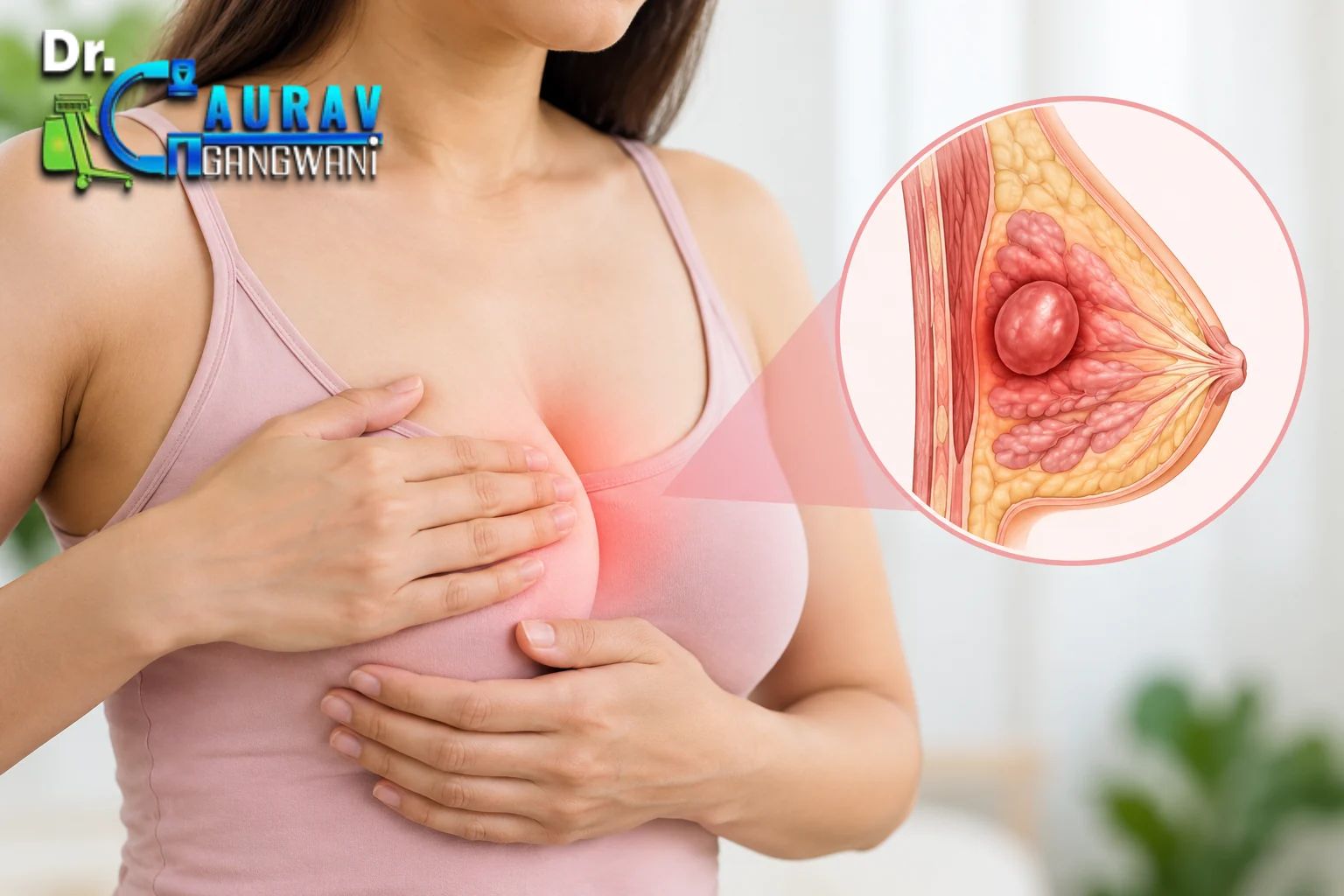
A painful lump in breast tissue has several possible causes, and many of them are benign. Pain, however, cannot confirm a harmless cause or rule out cancer, so the lump itself still needs to be examined.
Most people who find one worry about the same things: whether the pain is a reassuring sign, which test comes first, and whether waiting is safe. Cysts, hormonal changes, infection, and fibroadenomas are common explanations, but they cannot be told apart by touch at home. Doctors choose between ultrasound, mammography, and biopsy based on age, breastfeeding status, and examination findings, not on pain alone.
Not necessarily, but pain is a poor guide in either direction. Breast cancer is often painless, yet it can hurt, as can many benign lumps.
A palpable lump is one you can feel, while breast pain without any lump is a separate problem and is assessed differently. The NHS advises getting any new breast lump checked, because most are harmless, but some are serious.
A lump during breastfeeding is not always a blocked milk duct.
Any new breast lump needs assessment, whether or not it hurts. Earlier reviews matter more if you notice:
Redness, warmth, swelling, fever or feeling unwell point towards infection and need timely assessment, particularly while breastfeeding. Most lumps are not emergencies, but severe illness or fast-spreading redness with high fever should be seen urgently.
At the first visit, the doctor usually asks when the lump appeared, whether it changes with your periods, and about pregnancy, breastfeeding, and family history, and then examines the breasts. Tests are chosen based on what is found.
Patients do not all follow the same sequence, and not everyone needs all three tests. A simple cyst may need no biopsy, but a lump that feels suspicious on examination still needs follow-up even when the scan looks reassuring.
See a doctor soon after finding a new lump, even if it is painful and seems linked to your period. Pressing it repeatedly will not reveal what it is.
Tell the doctor if you are breastfeeding, pregnant, or past menopause, because this changes which test is chosen. Bring any earlier scans or reports, and note when you first felt the lump.
If an early test is reassuring but the lump persists, grows, or still worries you, go back and say so. Treatment depends on the confirmed cause, whether that is follow-up for a cyst, treatment for infection, or further tests for a suspicious finding.
Often, yes. Cysts, fibroadenomas, hormonal changes and infection are common reasons for a painful lump in breast tissue, though examination and tests are needed to know which applies.
Yes, although it is often painless. Tenderness should therefore not be taken as a sign that nothing serious is going on.
No. A simple cyst may need only ultrasound and follow-up, whereas a solid or suspicious lump is more likely to need tissue sampling.
In younger patients, it is often the first test and sometimes the only one needed. It does not settle every diagnosis, so a doctor may add mammography or biopsy if concern remains.
Yes, particularly if the area is red, warm, or painful, or you have a fever. Do not assume a blocked duct; get it examined promptly.
A new or persistent breast lump deserves examination, whether or not it hurts. Consult Dr Gaurav Gangwani in Mumbai to find out what is causing it and which tests, if any, you need. If a benign lump such as a fibroadenoma needs removal, non-surgical options like vacuum-assisted excision may avoid an open operation.
This article is for general information and does not replace a medical consultation.
Dr. Gangwani Vascular Clinic, 302/TGN SQUARE 3rd floor Chandawarkar lane Borivali west Mumbai 400092
+91 9326195964
drgauravgangwani@gmail.com
Monday to Saturday: 8.30 am to 8.00 pm. For any quires & assistance please call on: +91 9082394787
Copyright 2026 – www.drgauravgangwani.com
Website Managed by SEO Discovery
WhatsApp us