

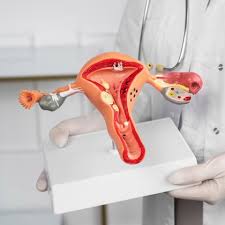
The fallopian tubes are tiny, yet a blockage in them can make it hard to conceive. The tricky part is that many women feel nothing: no pain, no odd periods, no warning. So how to know fallopian tubes are blocked? Symptoms rarely tell the story. Learning what can cause a blockage and which tests doctors use to check helps in deciding when it is time to see a gynecologist.
The Government of India’s Ministry of Health and Family Welfare lists blocked fallopian tubes as one possible cause of infertility in its Standard Treatment Guidelines. Since symptoms cannot confirm a blockage on their own, a medical examination and diagnostic testing are necessary.
A confirmed blockage does not lead to one fixed treatment. The location of the block, how bad it is, and what caused it all shape the choice. Recanalization is one option doctors sometimes consider, and Dr. Gaurav Gangwani describes fallopian tube recanalization as a way to open certain blockages without surgery, using a thin catheter guided by imaging. Reading up on it before an appointment helps patients come with better questions. Whether it suits a particular case is for the specialist to decide after examining the patient.
Fallopian tubes become blocked when infection, inflammation, or scarring harms the narrow channel inside the tube or the tissue around it. The World Health Organization counts reproductive tract infections among the known causes of tubal damage.
Some other causes are
Having one of these doesn’t mean a blockage is certain.
Blocked fallopian tubes often cause no noticeable symptoms. Often the first clue is difficulty in conceiving, though plenty of other fertility issues can cause the same thing.
Some women do get pelvic pain or painful periods. That usually traces back to a related problem such as endometriosis or pelvic inflammatory disease. Unusual discharge or a fever may be a different matter, since it more likely points to an infection that needs to be looked at soon.
A regular period doesn’t rule out a blockage. And no symptom, on its own, can confirm one.
Tubal patency tests are performed to ensure that the fallopian tubes are open. The tests most often used are:
One thing worth knowing: a blockage seen near the uterus on HSG can sometimes be a temporary muscle spasm. So doctors may need to run more tests before confirming it.
Wondering how to know fallopian tubes are blocked? Tests like HSG show doctors whether the tubes are open. In case of a possible blockage, specialist from either gynaecology or the field of fertility examines the results and decides whether more tests are necessary.
Depending on the exact location of the blockage, its severity, causes, and your goals for the treatment, different approaches may be recommended, including treatment for infection, a certain procedure, or other fertility treatments. Knowing exactly what the diagnosis means makes it easier to decide what to do next. Your specialist can guide you through the next steps, all the way to making the right diagnosis and finding the right treatment for your specific case.
Fallopian tube recanalization is done under imaging guidance and aims to open certain blockages, mostly those near the uterus. A thin catheter is used to try to reopen the passage in the affected tube, with no open surgery involved.
Interventional radiologist Dr. Gaurav Gangwani talks about it as an option for selected cases. It won’t work for every kind of tubal damage, though. The specialist needs to look at the test results first and then explain what the procedure could offer, what the risks are, and where its limits lie.
Yes. Many blockages cause nothing at all and only show up when fertility tests are done.
Not reliably. A routine scan can’t show if the tubes are open, which is why doctors usually suggest HSG or a specialised ultrasound-based test.
Yes. Periods can stay regular even when one tube or both are blocked.
Some blockages are treatable. Which option fits depends on the cause, the location, and the severity.
No. It’s mainly for selected blockages near the uterus and doesn’t work for every kind of tubal damage.
Dr. Gangwani Vascular Clinic, 302/TGN SQUARE 3rd floor Chandawarkar lane Borivali west Mumbai 400092
+91 9326195964
drgauravgangwani@gmail.com
Monday to Saturday: 8.30 am to 8.00 pm. For any quires & assistance please call on: +91 9082394787
Copyright 2026 – www.drgauravgangwani.com
Website Managed by SEO Discovery
WhatsApp us