

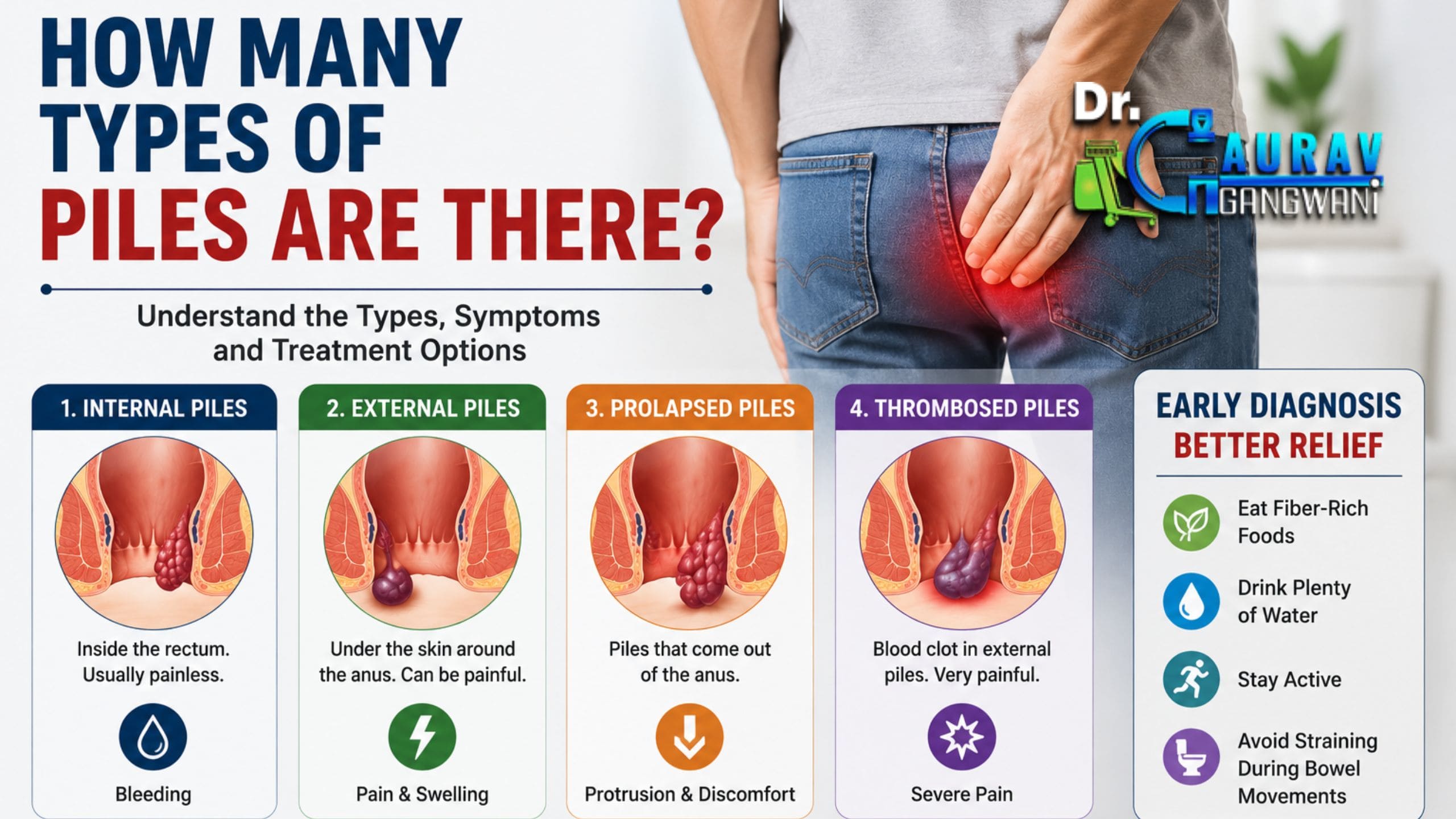
There are four main types of piles: internal piles, external piles, prolapsed piles, and thrombosed piles. Each type has different symptoms, severity, and treatment options. Identifying the type of piles early helps you choose the right treatment and prevent the condition from getting worse.
Piles are a common condition, but many people are unsure about the different types and how they affect the body. Some types cause little or no discomfort, while others can lead to pain, bleeding, and swelling.
Understanding how many types of piles there are helps you recognize symptoms early and choose the right treatment for piles before the condition becomes more serious.
In this guide, you will learn about the four main types of piles, their symptoms, causes, and treatment options, along with simple tips to help prevent future flare-ups.
Piles, also called hemorrhoids, are swollen veins in or around the anus and lower rectum. They are a common health problem that affects people of all ages. Many cases improve with simple lifestyle changes, while others need medical treatment.
The first step toward relief is understanding how many types of piles there are and how each one affects your body. Knowing the differences helps you recognize symptoms early and seek proper care before complications develop.
Piles develop when the veins in the lower rectum or around the anus become swollen because of extra pressure.
Some people have no symptoms, while others experience pain, itching, bleeding, or swelling.
There are four different types of piles. Each one develops in a different area and causes different symptoms.
Internal piles form inside the rectum. They are usually painless because there are fewer pain-sensitive nerves in this area.
Internal piles often go unnoticed until bleeding begins.
External piles develop under the skin around the anus. They are more likely to cause discomfort because this area contains many nerve endings.
External piles can make daily activities uncomfortable if left untreated.
Prolapsed piles are internal piles that extend outside the anus. At first, they may go back inside on their own. As they become larger, they may need to be pushed back manually.
Without treatment, prolapsed piles may continue to worsen over time.
Thrombosed piles occur when a blood clot forms inside an external pile. This is considered one of the most painful forms of piles.
Medical evaluation is often recommended because the pain can be intense.
Besides different types, internal piles are also classified into grades based on their severity.
| Grade | Description |
| Grade I | Swollen veins remain inside the rectum. |
| Grade II | Piles come out during bowel movements but return on their own. |
| Grade III | Piles come out and need to be pushed back manually. |
| Grade IV | Piles remain outside permanently and usually require medical treatment. |
The higher the grade, the more advanced the condition becomes.
Symptoms vary depending on the type of piles. You may notice:
Not everyone experiences every symptom.
Several factors increase pressure on the veins around the rectum.
Common causes include:
Reducing these risk factors can lower the chance of developing piles.
Yes. Treatment depends on the type and severity of the piles.
A proper examination helps determine the most suitable treatment.
Do not ignore symptoms that continue for several days. Medical advice is recommended if you have:
Early diagnosis often makes treatment easier and helps prevent complications.
Simple daily habits can reduce your risk. Try to:
These healthy habits also support better digestive health.
Knowing how many types of piles there are helps you identify symptoms early and seek timely treatment. While mild cases may improve with lifestyle changes, persistent pain, bleeding, or swelling should be checked by a specialist.
At Dr. Gangwani’s Vascular Clinic, Dr. Gaurav Gangwani provides personalized diagnosis and treatment to help you manage piles effectively and prevent complications.
Q1. How many types of piles are there?
There are four main types of piles: internal piles, external piles, prolapsed piles, and thrombosed piles.
Q2. Which type of piles is the most painful?
Thrombosed piles are usually the most painful because they contain a blood clot that causes swelling and severe discomfort.
Q3. Can internal piles become external piles?
Internal piles do not become external piles, but they can prolapse and extend outside the anus as they progress.
Q4. Do all types of piles require surgery?
No. Most mild and moderate cases improve with lifestyle changes or minimally invasive treatments. Surgery is generally recommended only for severe or persistent piles.
Q5. Where should I seek treatment for piles?
If symptoms do not improve or become more severe, visiting Dr. Gangwani’s Vascular Clinic for a proper diagnosis and treatment plan is the best step.
Dr. Gangwani Vascular Clinic, 302/TGN SQUARE 3rd floor Chandawarkar lane Borivali west Mumbai 400092
+91 9326195964
drgauravgangwani@gmail.com
Monday to Saturday: 8.30 am to 8.00 pm. For any quires & assistance please call on: +91 9082394787
Copyright 2026 – www.drgauravgangwani.com
Website Managed by SEO Discovery
WhatsApp us