

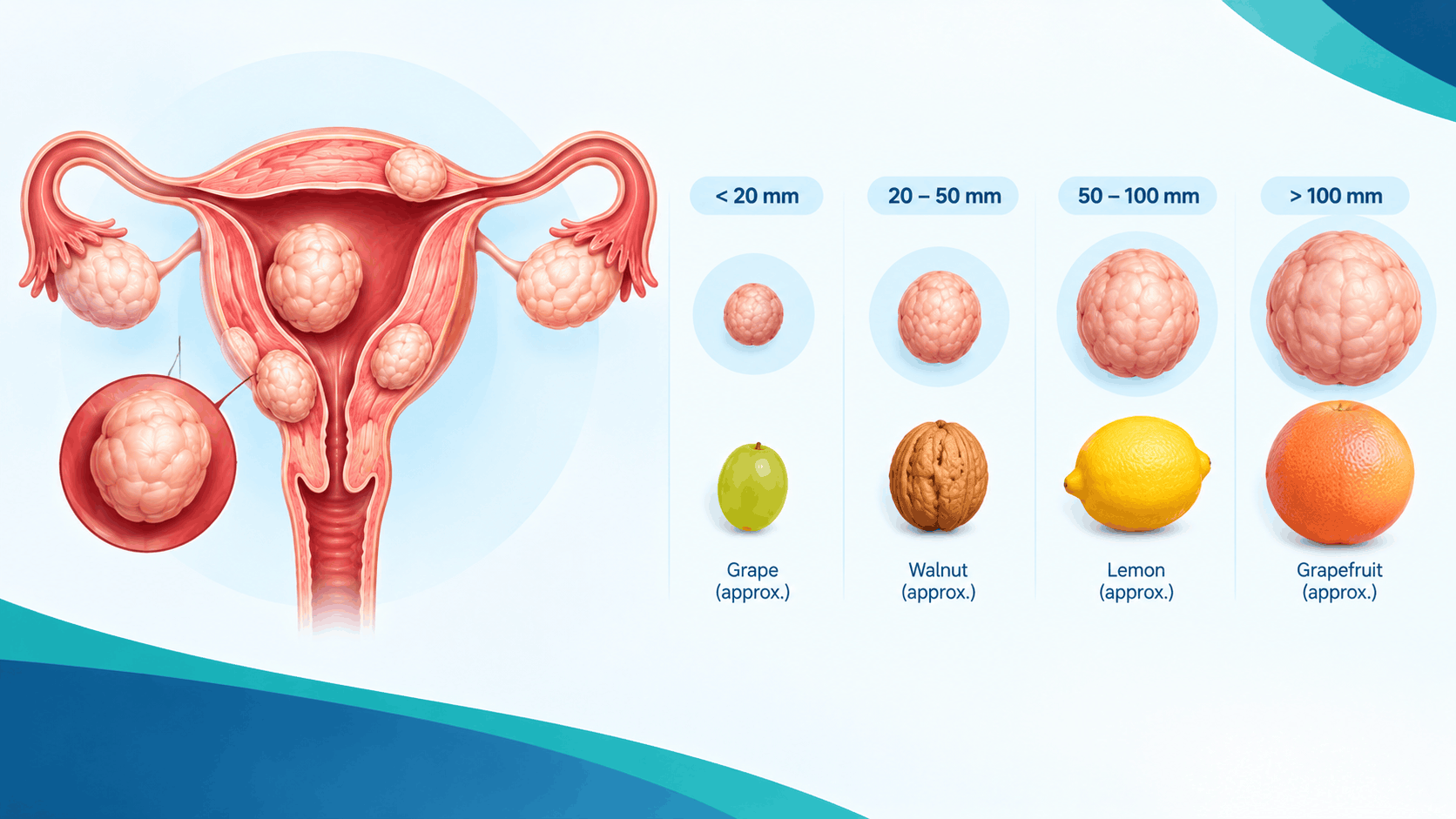
Heavy periods are a common reason women are told they have uterine fibroids, but a fibroid on a scan does not automatically mean it is the cause. These growths are benign (non-cancerous) masses of smooth muscle and fibrous tissue in the uterine wall, and the Office on Women’s Health notes the chance of one being cancerous is less than one in 1,000.
The bleeding depends on where they sit: a small fibroid just beneath the lining can trigger flooding periods, while a larger one on the outer wall often causes no bleeding at all. Heavy periods have other causes too: hormonal imbalance, adenomyosis, polyps, and bleeding disorders can produce similar symptoms, sometimes alongside a fibroid doing nothing.
Not every heavy period is a fibroid problem; location and size matter. For women needing treatment, non-surgical options such as uterine artery embolization, offered by interventional radiologist Dr. Gaurav Gangwani in India, can shrink fibroids while preserving the uterus, but the first step is a clear diagnosis of what is actually driving the bleeding.
Fibroids are most likely to blame for heavy bleeding when they grow just beneath the uterine lining or push into the cavity itself. These are called submucosal fibroids. Fibroids can cause heavy or painful periods, and the effect depends on their size and location.
Signs that point toward fibroids as the culprit include:
Still, these symptoms on their own cannot prove uterine fibroids are responsible. A proper assessment and pelvic ultrasound are needed to link the findings to the bleeding.
Finding fibroids on a scan does not mean they are causing the bleeding. Many women carry fibroids with no symptoms at all, and the two may simply coexist.
Heavy periods have other possible drivers: hormonal shifts, adenomyosis, uterine polyps, thyroid problems, or bleeding disorders. Certain medications, including blood thinners, can also play a role. Other clues exist but do not confirm the cause; painful periods may point to adenomyosis or endometriosis, while irregular bleeding often signals hormonal changes or another condition.
Fibroids usually shrink after menopause. Even so, any new bleeding after menopause or a growing uterine mass needs a doctor’s review rather than being blamed on fibroids by default.
A doctor can weigh the patient’s symptoms, history, and scan to see if the fibroids are really the cause or if something else is going on.
Doctors review your menstrual history, symptoms, and medical history. Next comes an ultrasound, which shows the size, number, and position of any fibroids. A blood test can pick up low iron. If more detail is needed, a hysteroscopy lets the doctor look inside the uterus with a thin camera to check for fibroids or polyps. Not every woman needs every test. Also, a fibroid on the scan doesn’t prove it is the reason for the bleeding.
There is no single answer here. What works best depends on how heavy the bleeding is, where the fibroids are, how large they’ve grown, and whether a woman wants children in the future.
Sometimes a fibroid just needs to be watched. A specialist can go over her symptoms, her scan results, and her plans for pregnancy, then help her land on the option that fits.
Book a visit with a specialist if heavy periods get in the way of everyday life, run past seven days, or leave her tired, weak, or short of breath. Sudden or severe bleeding shouldn’t wait, so patients should get medical help quickly. At Dr. Gangwani’s Vascular Clinic, women can have an assessment to find out whether fibroids are behind their symptoms and talk through treatment choices, including uterine fibroids embolization. What suits her best depends on her diagnosis and her needs.
Even a small one can lead to a lot of bleeding if it sits inside the uterine cavity or right next to it. Where it grows often counts for more than how big it is.
Some fibroids can make conceiving harder or raise the risk of problems, mainly when they change the shape of the uterine cavity. Still, plenty of women with fibroids go on to have healthy pregnancies.
They often shrink as hormone levels drop, but they don’t always go away. Any bleeding after menopause should be checked by a doctor.
Fibroids are benign, and cancer of the uterine muscle is rare. If the uterus keeps growing or bleeding starts after menopause, a doctor should look into it instead of assuming the old fibroids are to blame.
A myomectomy removes the fibroids that are there but leaves the uterus, so new ones can form later. How likely that is depends on the woman and on the treatment she had.
Dr. Gangwani Vascular Clinic, 302/TGN SQUARE 3rd floor Chandawarkar lane Borivali west Mumbai 400092
+91 9326195964
drgauravgangwani@gmail.com
Monday to Saturday: 8.30 am to 8.00 pm. For any quires & assistance please call on: +91 9082394787
Copyright 2026 – www.drgauravgangwani.com
Website Managed by SEO Discovery
WhatsApp us