

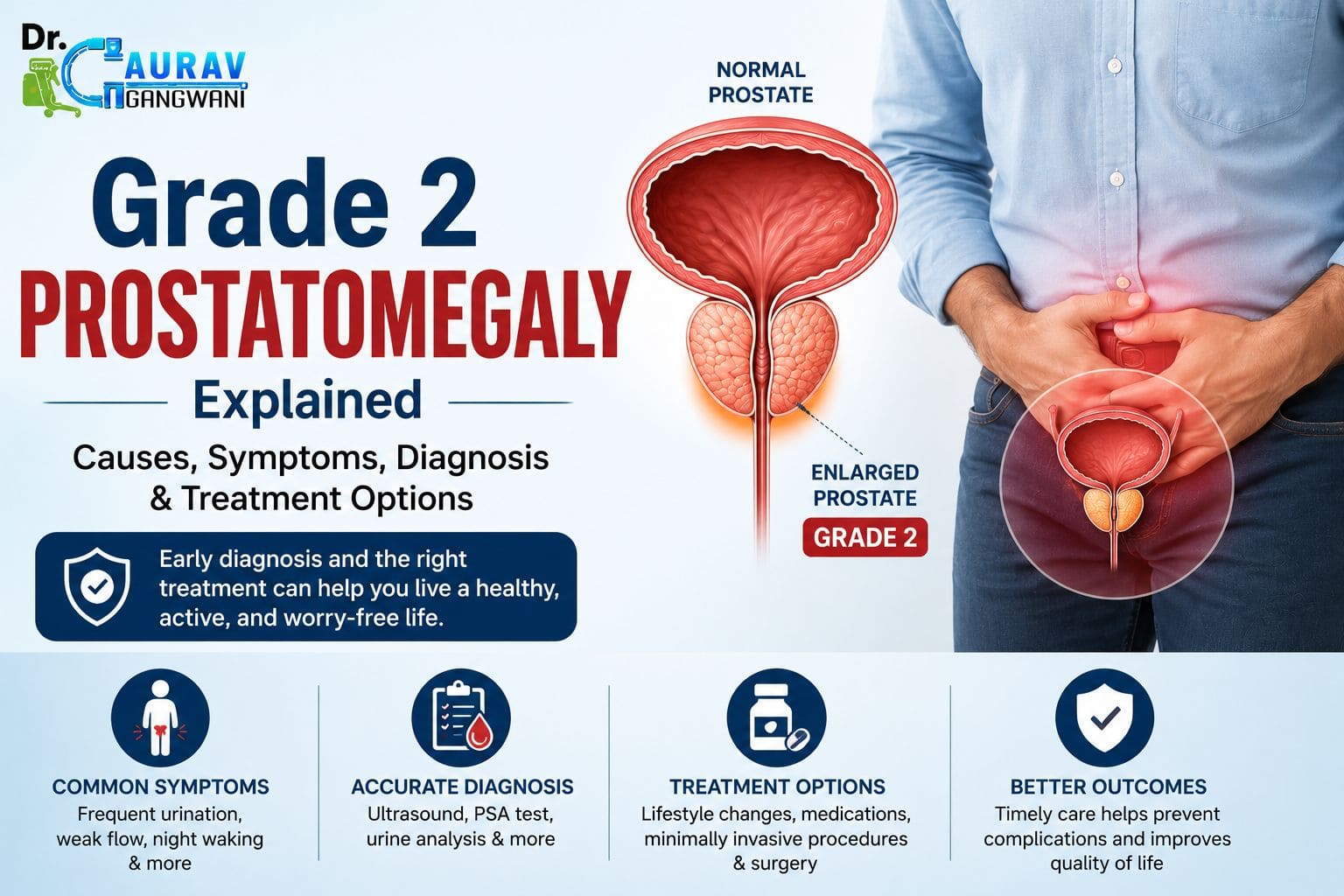
Seeing “Grade 2 prostatomegaly” on your ultrasound report can feel confusing, but there’s no need to panic. In most cases, it simply means your prostate is moderately enlarged. The right step is to consult a urologist, understand the reason behind the enlargement, and begin treatment if needed before symptoms become more troublesome.
The earlier the condition is diagnosed, the easier it is to manage. Many men live healthy, active lives with the right care and regular follow-ups.
| Aspect | Clinical Reality |
| Emergency Status | Not considered a medical emergency in most cases. |
| Progression Risk | Growth can press against the urethra, restricting normal urine flow. |
| Impact on Quality of Life | Ranges from mild discomfort to disruptions in sleep, work, and routines. |
| Prognosis | Early treatment successfully controls the condition and prevents complications. |
Not every man experiences symptoms immediately. When symptoms do appear, they include:
Emergency Warning: If you suddenly cannot pass urine at all, seek immediate medical attention.
The most common, non-cancerous enlargement developing naturally with age. While not cancer, it can cause bothersome urinary symptoms if left untreated.
Shifting hormone levels over time stimulate prostate growth, making enlargement much more common after age 50.
Inflammation or infection of the prostate, which can cause pelvic pain, fever, painful urination, or discomfort during ejaculation.
Having a father or brother with prostate enlargement slightly increases your personal risk.
Risk factors include being overweight, having diabetes, eating an unhealthy diet, and lacking regular exercise.
An ultrasound provides valuable insights, though it serves as only one component of a complete diagnosis:
Yes, if left untreated. The prostate may continue to grow over time, leading to complications such as:
Regular follow-ups allow your doctor to monitor the condition and prevent these complications.
Even a moderately enlarged prostate can interfere with everyday activities, causing:
[Mild Symptoms] —> Lifestyle Changes
[Moderate Symptoms] -> Medications
[Advanced Symptoms] -> Minimally Invasive Procedures or Surgery
Do not wait for symptoms to become severe. Schedule an appointment if you experience:
At Dr. Gangwani’s Vascular Clinic, patients receive a detailed evaluation to determine the exact cause of prostate enlargement. Dr. Gaurav Gangwani carefully reviews your symptoms, imaging findings, and overall health before suggesting the most appropriate management plan.
A Grade 2 prostatomegaly finding on an ultrasound is not something to fear, but it is something to take seriously. Ignoring symptoms may allow the condition to progress, making treatment more complicated later.
Seeking medical advice early gives you more treatment options, helps relieve symptoms sooner, and lowers the risk of long-term complications. The experienced team at Dr. Gangwani’s Vascular Clinic, led by Dr. Gaurav Gangwani, can help identify the cause, recommend the right treatment, and support your long-term prostate health.
No. Grade 2 prostatomegaly usually refers to a moderate enlargement of the prostate. However, your doctor may recommend additional tests to rule out prostate cancer if needed.
In most cases, it does not shrink on its own. Lifestyle changes, medications, or other treatments may be needed depending on your symptoms.
No. Many men manage the condition successfully with lifestyle changes and medications. Surgery is usually reserved for severe symptoms or complications.
A healthy diet rich in fruits, vegetables, whole grains, healthy fats, and lean protein may support overall prostate health. Drinking enough water and maintaining a healthy weight are also beneficial.
You should seek medical advice if you experience frequent urination, difficulty passing urine, weak urine flow, blood in the urine, or recurring urinary infections. Early evaluation can help prevent complications and improve your quality of life.
Dr. Gangwani Vascular Clinic, 302/TGN SQUARE 3rd floor Chandawarkar lane Borivali west Mumbai 400092
+91 9326195964
drgauravgangwani@gmail.com
Monday to Saturday: 8.30 am to 8.00 pm. For any quires & assistance please call on: +91 9082394787
Copyright 2026 – www.drgauravgangwani.com
Website Managed by SEO Discovery
WhatsApp us