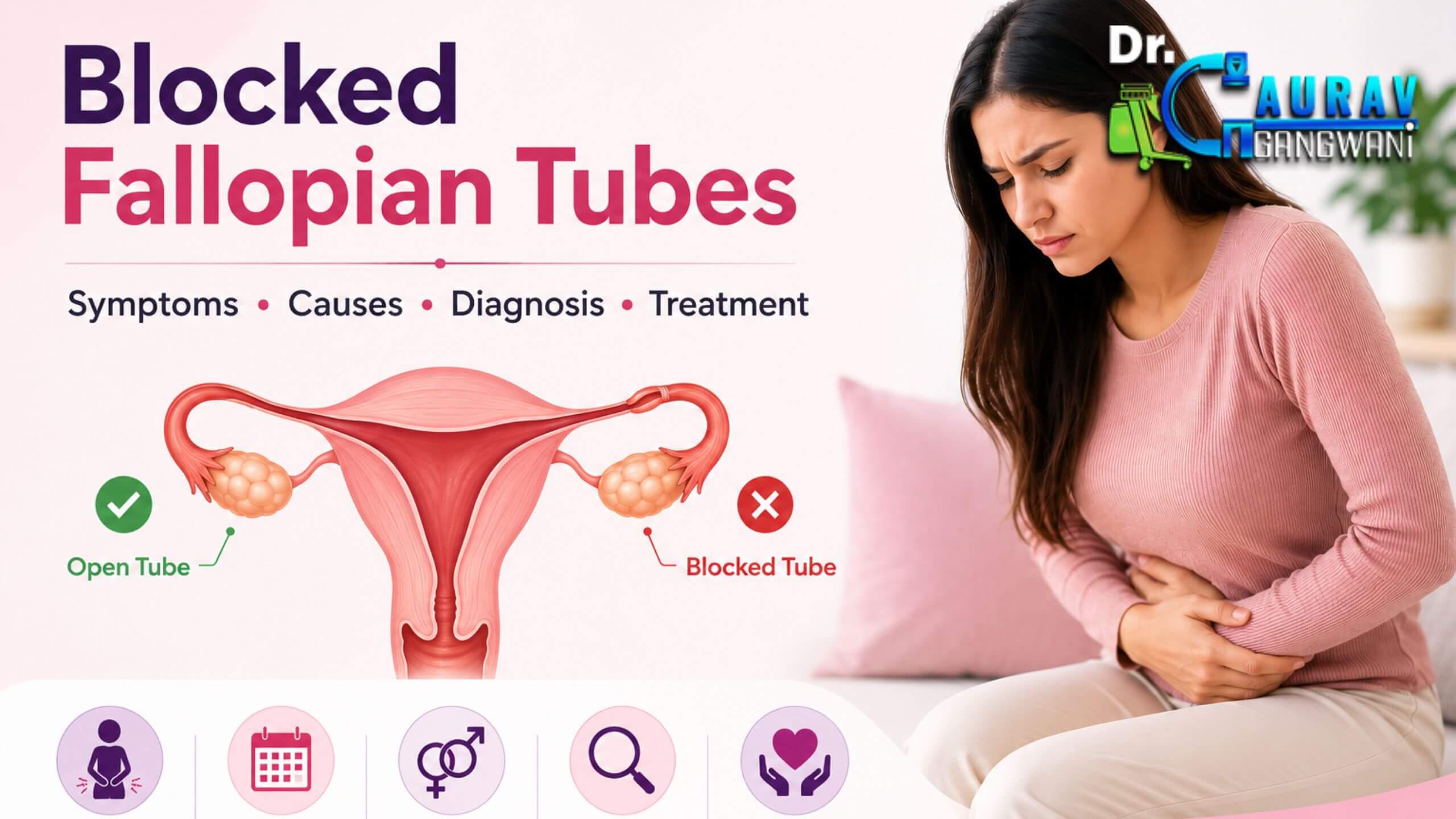
Quick Answer: Blocked fallopian tubes can make it difficult for the egg and sperm to meet, leading to fertility problems. Early diagnosis and the right treatment can improve the chances of pregnancy. If you notice symptoms like ongoing pelvic pain, painful periods, or trouble conceiving, seeing a fertility specialist is the best next step.
Blocked fallopian tubes are one of the common causes of female infertility. Many women do not realize they have a blockage until they start trying to conceive. While some women experience noticeable symptoms, others may have none at all.
The good news is that modern diagnostic tests and fertility treatments can identify the problem and provide effective solutions. At Dr Gangwani’s Vascular Clinic, patients receive a personalized evaluation to find the underlying cause and choose the most suitable treatment plan.
What Are Blocked Fallopian Tubes?
- Anatomy & Function: The fallopian tubes connect the ovaries to the uterus. Every month, an egg travels through these tubes after ovulation. Fertilization usually happens inside the fallopian tube before the fertilized egg moves to the uterus.
- The Problem: When one or both tubes become blocked, the egg and sperm cannot meet, making natural pregnancy difficult.
- Characteristics: The blockage can be partial or complete, and it may occur at the beginning, middle, or end of the tube.
Common Blocked Fallopian Tubes Symptoms
Many women do not experience any warning signs. However, some symptoms may suggest a blockage:
- Difficulty Getting Pregnant: The most common sign is being unable to conceive after trying for several months or longer.
- Pelvic Pain: Some women experience mild or ongoing pain in the lower abdomen, especially on one side.
- Pain During Periods: Painful menstrual cramps may become worse if the blockage is linked to conditions like endometriosis.
- Pain During Intercourse: Pain during or after sex may indicate an underlying pelvic condition affecting the fallopian tubes.
- Unusual Vaginal Discharge: Certain infections that damage the tubes may also cause abnormal vaginal discharge.
- Previous Ectopic Pregnancy: A partially blocked tube increases the risk of an ectopic pregnancy, where the fertilized egg implants outside the uterus.
Not every woman with blocked fallopian tubes symptoms experiences all of these signs. Some only discover the condition during fertility testing.
What Causes Blocked Fallopian Tubes?
Several health conditions can damage or block the fallopian tubes. Finding the exact cause helps determine the most effective treatment.
| Category |
Specific Causes |
| Infections & Scarring |
• Pelvic inflammatory disease (PID)
• Sexually transmitted infections
• Scar tissue from previous infections |
| Medical Conditions |
• Endometriosis
• Fibroids pressing against the tubes |
| Surgical & Medical History |
• Previous pelvic or abdominal surgery
• Previous ectopic pregnancy
• Tubal damage after surgery |
Who Is at Higher Risk?
Some women have a greater chance of developing blocked tubes. Knowing your risk can help you seek medical advice earlier.
- History of pelvic infections
- Untreated sexually transmitted infections
- Endometriosis
- Previous abdominal surgery
- Multiple pelvic procedures
- Previous ectopic pregnancy
- Chronic pelvic pain
How Are Blocked Fallopian Tubes Diagnosed?
Early diagnosis allows doctors to recommend the best treatment before complications develop.
- Hysterosalpingography (HSG): This X-ray test uses a special dye to check whether the fallopian tubes are open.
- Ultrasound: An ultrasound can identify certain conditions that may affect the reproductive organs.
- Sonohysterography: A saline solution is used during ultrasound to examine the uterus and nearby structures.
- Laparoscopy: This minimally invasive surgery allows doctors to examine the fallopian tubes and surrounding organs directly.
- Fertility Evaluation: A complete fertility assessment may include hormone testing, ovulation monitoring, and evaluation of both partners.
Treatment Options for Blocked Fallopian Tubes
Treatment depends on the location, severity, and cause of the blockage.
- Medications: If an active infection is present, antibiotics may be prescribed before other treatments.
- Laparoscopic Surgery: Minimally invasive surgery can remove scar tissue, treat endometriosis, or repair certain blockages.
- Tubal Cannulation: For blockages near the uterus, a thin catheter may be used to reopen the tube.
- In Vitro Fertilization (IVF): If both tubes are severely damaged or surgery is unlikely to succeed, IVF may offer the highest chance of pregnancy.
- Treating the Underlying Condition: Managing conditions like endometriosis or pelvic infections helps improve overall reproductive health.
Can You Get Pregnant with Blocked Fallopian Tubes?
Yes, pregnancy is still possible. Your chances depend on factors such as:
- Whether one or both tubes are blocked
- The location of the blockage
- Your age
- Egg quality
- Overall reproductive health
- The presence of other fertility issues
Women with one healthy fallopian tube may still conceive naturally. Others may benefit from fertility treatments such as surgery or IVF.
When Should You See a Fertility Specialist?
Do not ignore symptoms that continue or affect your daily life. You should schedule an evaluation if you:
- Have been trying to conceive without success
- Experience ongoing pelvic pain
- Have painful menstrual periods
- Have a history of pelvic infections
- Previously had an ectopic pregnancy
- Have been diagnosed with endometriosis
Early medical evaluation often leads to better treatment options and improved outcomes.
Simple Ways to Protect Your Reproductive Health
While not every blockage can be prevented, healthy habits can reduce certain risks:
- Early Infection Treatment: Treating any pelvic or reproductive infections as early as possible prevents permanent scar tissue formation.
- Safe Practices: Practicing safe sex consistently helps lower the overall risk of contracting sexually transmitted infections.
- Routine Checkups: Attending regular gynecological checkups ensures potential reproductive health issues are detected and managed promptly.
- Condition Management: Following prescribed treatment plans for endometriosis or chronic pelvic conditions protects your long-term fertility.
- Medical Consultation: Seeking timely medical advice if ongoing pelvic pain continues helps address underlying reproductive concerns early.
- Prompt Evaluation: Avoiding delays in fertility evaluation when pregnancy does not occur ensures timely and effective interventions.
Taking action early can help protect fertility and support long-term reproductive health.
Early Diagnosis Can Make a Difference
Blocked fallopian tubes do not always cause symptoms, but they can significantly affect fertility. Recognizing the warning signs, identifying the underlying cause, and receiving timely treatment can improve your chances of a healthy pregnancy.
If you have concerns about your fertility or are experiencing persistent pelvic symptoms, Dr Gaurav Gangwani can recommend the right diagnostic tests and treatment options based on your individual needs.
At Dr. Gangwani’s Vascular Clinic, every patient receives a personalized approach focused on improving reproductive health and helping them move forward with confidence.
Frequently Asked Questions:
1. Can blocked fallopian tubes clear on their own?
No. Most blocked fallopian tubes require medical evaluation and treatment. A fertility specialist can determine the most appropriate option.
2. Do blocked fallopian tubes always cause symptoms?
No. Many women have no symptoms and only learn about the condition during fertility testing.
3. Can I get pregnant if only one fallopian tube is blocked?
Yes. If the other tube is healthy and ovulation occurs normally, natural pregnancy is still possible.
4. What is the best test to diagnose blocked fallopian tubes?
An HSG test is commonly the first diagnostic test. Your doctor may also recommend laparoscopy or ultrasound depending on your condition.
5. When should I visit Dr. Gangwani’s Vascular Clinic for blocked fallopian tubes?
You should schedule an evaluation if you have ongoing pelvic pain, a history of pelvic infections, or have been trying to conceive without success. Early diagnosis can help identify the best treatment plan.