

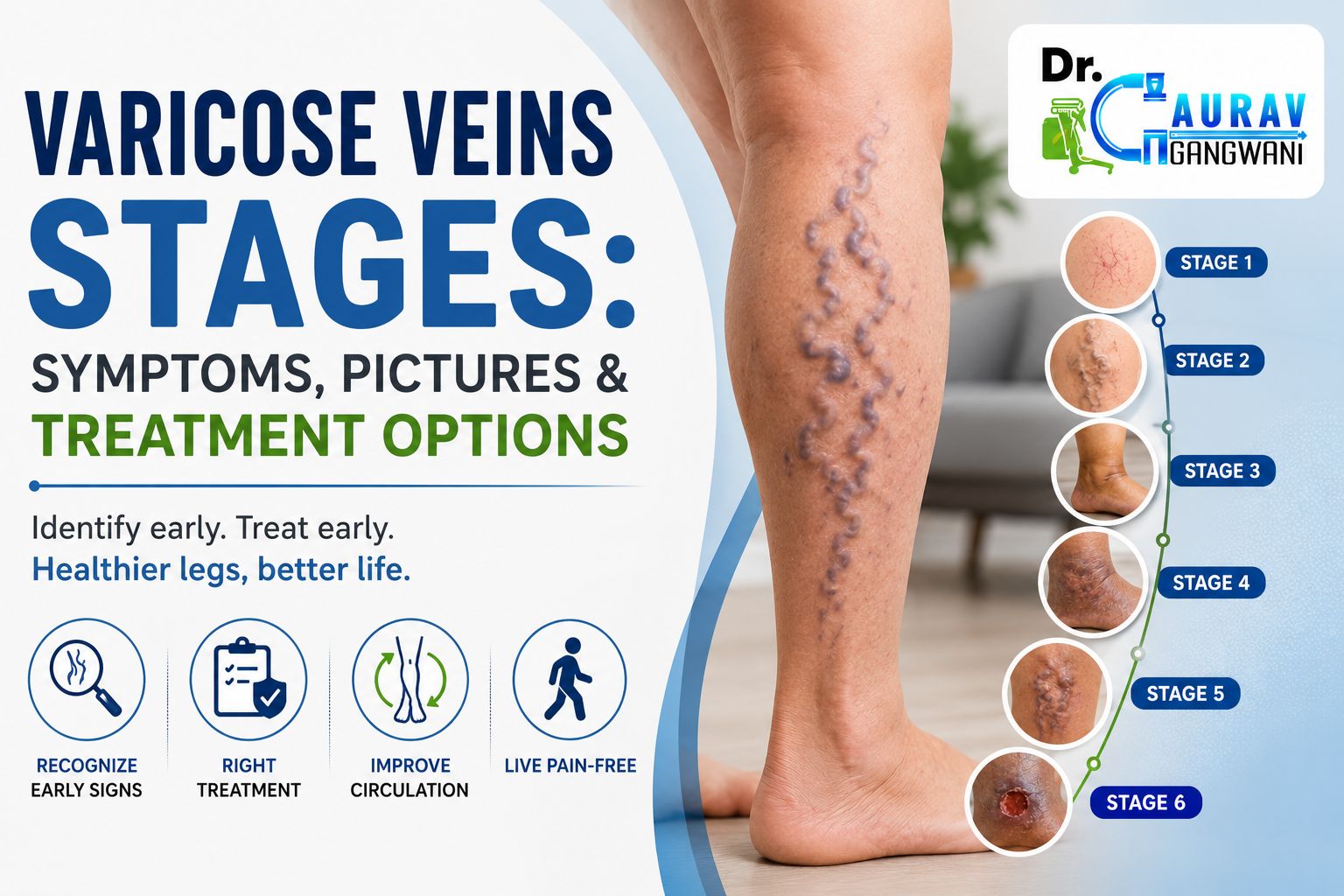
Varicose veins usually do not appear overnight. They develop slowly and become worse if they are ignored. The good news is that early treatment can stop the condition from progressing, reduce discomfort, and help you avoid complications.
If you notice swollen or twisted veins, getting evaluated early is the best step toward healthier legs.
Many people wait until the pain becomes severe before seeking help. Understanding the different stages of varicose veins can help you recognize warning signs early and choose the right treatment of Varicose veins at the right time.
Varicose veins happen when the valves inside your leg veins become weak or damaged. These valves normally keep blood flowing toward your heart. When they stop working properly, blood collects inside the veins, making them stretch and become enlarged.
The condition usually gets worse over time. That is why doctors classify it into different stages. Knowing these stages helps patients understand when medical treatment becomes necessary.
The earliest stage often begins with spider veins.
These are tiny red, blue, or purple veins that appear close to the skin. They usually look like small webs or thin branches.
At this stage, regular exercise, maintaining a healthy weight, and wearing compression stockings may help prevent further progression.
At this stage, the veins become larger, twisted, and easier to notice.
Many people begin experiencing discomfort after standing or sitting for long hours.
This is often the stage when most people decide to visit a vein specialist.
As vein damage increases, blood continues to pool inside the legs.
This causes noticeable swelling, especially around the ankles and feet.
Ignoring symptoms at this stage may lead to skin changes and more serious complications.
Poor blood circulation starts affecting the skin.
The skin around the ankles may become darker, thicker, or harder than normal.
These changes show that the veins have been damaged for a longer period and should be evaluated by a vascular specialist.
Some people develop open wounds called venous ulcers.
With proper treatment, these wounds may heal, but the underlying vein disease remains.
Even after healing, treatment is still important to prevent ulcers from coming back.
This is the most advanced stage of varicose vein disease.
Open sores develop because the skin and surrounding tissues no longer receive enough healthy blood circulation.
Immediate medical treatment is necessary to prevent further complications.
As the condition progresses, the appearance of your legs changes.
Generally, you may notice:
Looking at pictures online may give you a basic idea, but only a vascular specialist can accurately identify your stage through a proper examination.
Some people have a higher risk of developing advanced varicose veins than others. Your chances increase if the condition runs in your family, as genetics play an important role in vein health.
Aging, pregnancy, obesity, standing for long hours, sitting for extended periods, and a lack of regular physical activity can also put extra pressure on your veins.
If you have one or more of these risk factors, it is important to pay attention to early symptoms and have your vein health checked before the condition becomes more serious.
Treatment depends on how advanced the condition is.
A vein specialist will recommend the most suitable option after evaluating your symptoms and ultrasound findings.
For mild cases, doctors often recommend:
These steps help improve blood flow and reduce symptoms.
For moderate to advanced stages, modern procedures offer faster recovery with minimal discomfort.
These may include:
Most procedures are completed without major surgery, allowing patients to return to normal activities quickly.
Do not wait until severe pain develops.
You should schedule an evaluation if you notice:
Early diagnosis often means simpler treatment and better long-term results. Preparing the right questions before your consultation can help you make informed treatment decisions.
Healthy daily habits can improve blood circulation, reduce symptoms, and help slow the progression of varicose veins.
These habits support better blood circulation and may reduce discomfort.
Varicose veins usually become worse when left untreated, but they do not have to control your daily life. Recognizing the different stages early allows you to seek treatment before complications develop.
At Dr. Gangwani’s Vascular Clinic, patients receive advanced evaluation and personalized treatment plans based on the severity of their vein disease.
If you are experiencing leg pain, swelling, or visible veins, Dr. Gaurav Gangwani can recommend the most appropriate treatment to restore comfort, improve circulation, and help you return to your daily routine with confidence.
Spider veins usually do not disappear on their own. However, healthy lifestyle changes and early treatment can prevent them from progressing.
Stages 5 and 6 are the most serious because they involve venous ulcers that require prompt medical attention.
A vascular specialist will examine your legs and may perform a Doppler ultrasound to determine the exact stage of your vein disease.
Yes. Walking and other low-impact exercises improve blood circulation and may reduce swelling and discomfort.
You should book an appointment if you have bulging veins, persistent leg pain, swelling, skin discoloration, or slow-healing wounds. Early evaluation at Dr. Gangwani’s Vascular Clinic can help prevent the condition from becoming more severe.
Dr. Gangwani Vascular Clinic, 302/TGN SQUARE 3rd floor Chandawarkar lane Borivali west Mumbai 400092
+91 9326195964
drgauravgangwani@gmail.com
Monday to Saturday: 8.30 am to 8.00 pm. For any quires & assistance please call on: +91 9082394787
Copyright 2026 – www.drgauravgangwani.com
Website Managed by SEO Discovery
WhatsApp us