
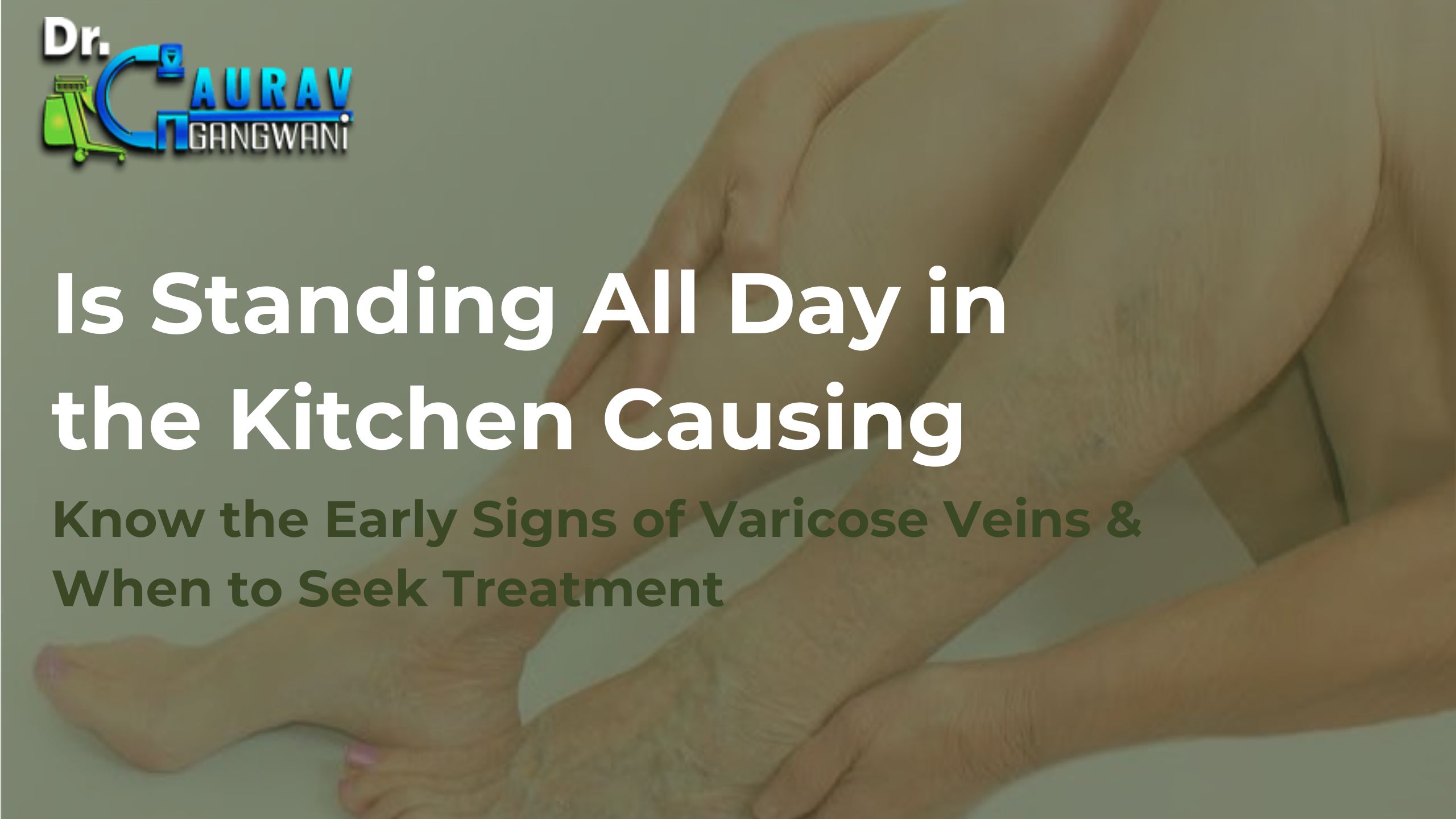
If you spend hours standing in the kitchen and have started noticing swollen, twisted, or bulging leg veins, standing for long periods could be one of the reasons.
The good news is that simple lifestyle changes and early treatment can help reduce discomfort and prevent the condition from getting worse.
Expert Care: At Dr. Gangwani’s Vascular Clinic, patients receive expert evaluation and advanced treatment options for varicose veins and other vein-related conditions.
Your leg veins have tiny valves that help move blood back to your heart. When these valves become weak or damaged, blood starts collecting inside the veins instead of flowing upward properly.
Over time, this extra pressure causes the veins to enlarge and become visible under the skin. These are known as varicose veins. The condition usually develops slowly; many people first notice small blue or purple veins before larger veins begin to bulge.
Standing alone does not directly cause varicose veins. However, standing for many hours every day increases pressure inside the leg veins.
If you already have weak vein valves or a family history of vein disease, long hours on your feet can make the problem appear sooner or become worse.
This is why chefs, home cooks, restaurant workers, bakery staff, and people working in food service often experience vein problems.
Kitchen work usually involves standing in one place for long periods. Unlike walking, standing still does not help your calf muscles pump blood back toward your heart. As a result, blood stays in the lower legs, increasing pressure inside the veins.
| Activity Category | Specific Examples |
| Preparation | Preparing meals for long hours, washing dishes |
| Environment | Standing on hard floors, working in commercial kitchens |
| Habits | Cooking without sitting down |
Many people ignore the early symptoms of varicose veins because they seem minor. Watch for these warning signs:
These symptoms often improve after resting or raising your legs.
Standing all day is only one risk factor. Other factors include:
Do not ignore symptoms that continue getting worse. Seek medical advice if you notice:
Modern Treatments: Many people believe surgery is the only solution, but today’s treatments are minimally invasive, quick, less painful, and require little downtime. After examining your veins, Dr. Gaurav Gangwani can recommend the most suitable treatment based on your condition.
While there is no guaranteed way to prevent them, especially if they run in your family, you can slow their progression through healthy habits:
Don’t Ignore the Early Signs: If your legs often feel tired after spending the day in the kitchen, it may be time for a professional evaluation. The team at Dr. Gangwani’s Vascular Clinic offers advanced diagnosis and personalized treatment plans to help you enjoy healthier legs.
Q1: Can standing all day in the kitchen cause varicose veins?
A: Standing for long hours increases pressure inside the leg veins, which can worsen weak vein valves and contribute to varicose veins.
Q2: Are varicose veins dangerous?
A: Not always, but untreated veins can lead to pain, swelling, skin changes, ulcers, or blood clots. It is best to have them evaluated.
Q3: Can exercise help reduce symptoms?
A: Yes. Walking, cycling, and swimming improve circulation and strengthen calf muscles.
Q4: Should I wear compression stockings in the kitchen?
A: They can improve blood flow and reduce swelling. Consult a specialist for the right compression level.
Q5: When should I visit Dr. Gangwani’s Vascular Clinic?
A: Schedule a consultation if you experience bulging veins, pain, swelling, heaviness, or skin discoloration.
Dr. Gangwani Vascular Clinic, 302/TGN SQUARE 3rd floor Chandawarkar lane Borivali west Mumbai 400092
+91 9326195964
drgauravgangwani@gmail.com
Monday to Saturday: 8.30 am to 8.00 pm. For any quires & assistance please call on: +91 9082394787
Copyright 2026 – www.drgauravgangwani.com
Website Managed by SEO Discovery
WhatsApp us