

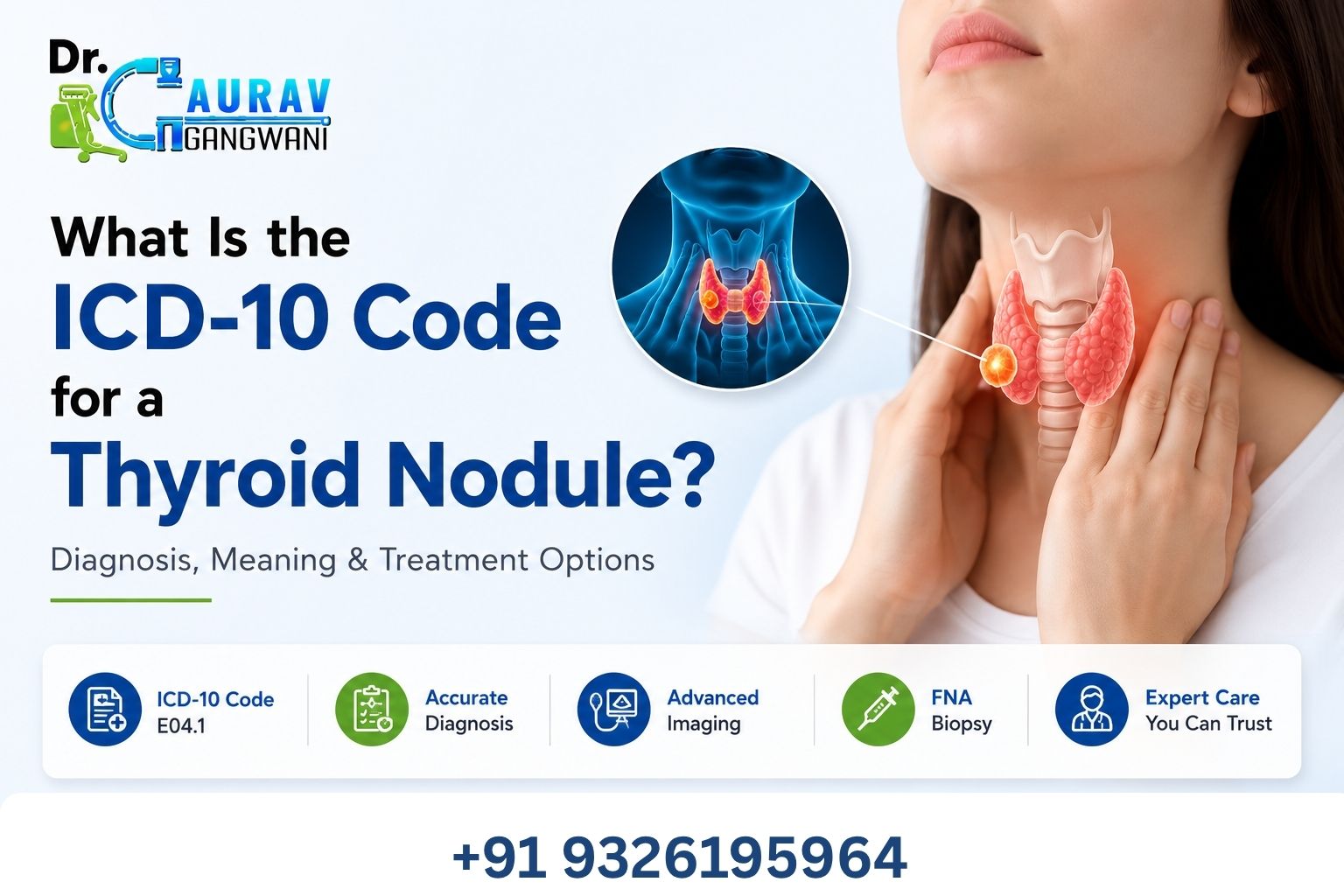
A thyroid nodule is a common condition that can be found during a physical exam or an imaging test. If your doctor mentions an ICD-10 code for a thyroid nodule, it simply refers to the medical code used to identify and document the condition for diagnosis, treatment, and insurance purposes.
At Dr. Gangwani’s Vascular Clinic, patients receive a proper evaluation to determine the cause of a thyroid nodule and the right next steps for thyroid nodule treatment.
Thyroid nodules are discrete lesions or “lumps” that are distinct from the surrounding thyroid tissue. They are remarkably common, and as imaging technology (like high-frequency ultrasound) becomes more advanced, we are identifying them more frequently than in previous decades.
While patients often find medical codes confusing, they are the backbone of modern healthcare data. The code E04.1 (Nontoxic Single Thyroid Nodule) provides a precise shorthand for your clinical file.
Why this code matters for you:
While the exact trigger for an individual’s thyroid nodule is often unknown, we look at a combination of environmental and genetic factors:
While most nodules are benign, it is important to be in tune with your body. Some patients develop symptoms of a large thyroid nodule as the growth begins pressing on nearby structures.
| Symptom | Potential Cause |
| Visible Swelling/Lump | Growth that has reached a palpable or visible size. |
| Dysphagia (Difficulty Swallowing) | The nodule is large enough to press against the esophagus. |
| Hoarseness | Pressure on the recurrent laryngeal nerve near the thyroid. |
| Hyperthyroid Symptoms | Excess hormone production (palpitations, weight loss, anxiety). |
At Dr. Gangwani’s Vascular Clinic, we utilize a tiered approach to ensure no detail is missed:
Treatment is highly individualized. We generally follow the principle of conservative management for small, benign nodules.
You should not have to navigate the anxiety of a new diagnosis alone. Whether you have a newly discovered nodule or require a second opinion on a previous finding, our clinic offers the expertise to guide you through the process.
If you have noticed a change in your neck or are concerned about a recent scan result, please contact Dr. Gangwani’s Vascular Clinic to schedule a consultation. Early evaluation is the most effective way to ensure your long-term thyroid health.
Q: If my report says “E04.1,” does that mean I have cancer?
A: Absolutely not. E04.1 specifically describes a “nontoxic” (benign functioning) nodule. It is a diagnostic classification, not a sign of malignancy.
Q: Can stress cause thyroid nodules?
A: There is no direct link between stress and the formation of thyroid nodules, though stress can exacerbate the symptoms of thyroid hormone imbalances if the nodule happens to be functioning.
Q: Do I need a referral to visit your clinic?
A: We encourage you to reach out to our office directly to discuss your specific needs and current referral requirements based on your insurance provider.
Q: Is ultrasound the only test I need?
A: Ultrasound is the best initial imaging tool. Still, blood work is essential to check for thyroid hormone function, and a biopsy may be required if the ultrasound findings show specific high-risk characteristics.
Dr. Gangwani Vascular Clinic, 302/TGN SQUARE 3rd floor Chandawarkar lane Borivali west Mumbai 400092
+91 9326195964
drgauravgangwani@gmail.com
Monday to Saturday: 8.30 am to 8.00 pm. For any quires & assistance please call on: +91 9082394787
Copyright 2026 – www.drgauravgangwani.com
Website Managed by SEO Discovery
WhatsApp us