

This article explains the specific symptoms a large thyroid nodule produces, why size and location within the gland matter, which symptoms signal that you need medical attention quickly, and what thyroid permanent treatment options exist beyond traditional surgery.
Most thyroid nodules don’t announce themselves. They sit quietly inside the gland, too small to feel, causing no symptoms. According to the American Thyroid Association, by age 60, about half of all people have at least one. The trouble starts when a nodule grows. Once it reaches 3 to 4 cm, it begins pressing on the windpipe, the oesophagus, and the nerves controlling your voice.
Nodules under 2 cm rarely cause issues, but symptoms like compression start around 3-4 cm; a Gland Surgery study found average size 3.8 cm in symptomatic patients vs. 2.2 cm asymptomatic, with dysphagia in 80%. If you’ve been feeling throat pressure, struggling to swallow, or noticing a lump in your neck, a large thyroid nodule could be the reason.
The first thing most people notice is a lump at the base of the neck, sometimes visible in the mirror, sometimes only when swallowing. A friend or family member might spot it first, particularly during meals when the thyroid moves up and down.
Beyond the lump, a large nodule creates fullness or pressure in the throat. Many patients describe feeling like something is stuck that they can’t swallow past. It’s worse when lying down because gravity shifts the nodule onto the windpipe and oesophagus.
It’s rarely painful. More of a constant awareness. But it worsens over time, and what started as mild tightness six months ago becomes difficulty swallowing solid food.
The thyroid sits in front of the windpipe and next to the oesophagus. A large nodule physically pushes against both.
Swallowing difficulty is the most reported symptom. Food feels stuck on the way down, especially larger bites. Some patients stop eating certain foods without realising they’ve been compensating.
Breathing problems show up during exercise first. Shortness of breath climbing stairs, tightness when taking deep breaths. Nodules on the isthmus (the thin strip sitting directly on the trachea) cause breathing symptoms at smaller sizes.
A persistent cough or constant throat clearing can also point to a large nodule pressing on the trachea or stretching the recurrent laryngeal nerve behind the thyroid.
Yes, though less common than swallowing or breathing issues. The nerves controlling your vocal cords run behind the thyroid. A large nodule growing in that direction can press on these nerves, causing hoarseness or a breathy, weaker voice.
This tends to develop gradually. If hoarseness comes on suddenly, see a specialist promptly, as sudden voice changes can sometimes indicate something more serious.
Not all large nodules just sit there. Some become “toxic” nodules, producing thyroid hormone independently. This causes hyperthyroid symptoms even when the rest of the gland works normally.
Signs include unexplained weight loss, rapid heartbeat, anxiety, trembling hands, excessive sweating, and difficulty sleeping. These symptoms don’t look like a “thyroid problem” to most people. They look like stress or heart trouble.
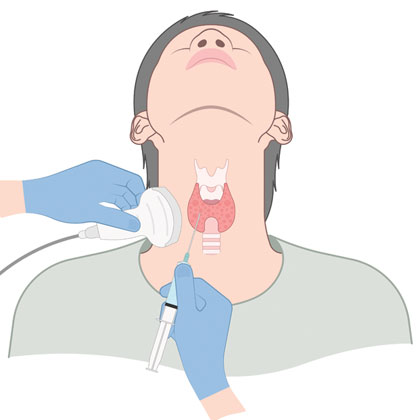
A blood test measuring TSH and thyroid hormone levels reveals the imbalance. An ultrasound confirms size and characteristics.
Don’t wait for symptoms to become severe. Get evaluated if you notice a lump at the base of your neck, gradual difficulty swallowing, a persistent cough that doesn’t respond to usual remedies, new shortness of breath during normal activity, or voice changes lasting more than two weeks.
Dr. Gaurav Gangwani’s clinic in Borivali, Mumbai provides thyroid evaluation using high-resolution ultrasound and guided biopsy when needed. For large benign nodules causing compression, he offers radiofrequency ablation and microwave ablation. These procedures shrink the nodule with targeted heat, no general anaesthesia, no scar, and most patients go home the same day.
The earlier a growing nodule is caught, the more options you have. Small ones get monitored. Large ones pressing on your airway need intervention, but that doesn’t have to mean surgery anymore.
Dr. Gangwani’s approach preserves the thyroid gland. Ablation treats the nodule while leaving healthy tissue intact, so most patients avoid lifelong hormone replacement. If you’ve been told surgery is your only option, a second opinion from an interventional radiologist may open a path you didn’t know existed.
Most nodules under 2 cm cause nothing. Symptoms usually start around 3 to 4 cm, though location matters. A nodule on the isthmus can cause trouble at a smaller size because it sits right on the windpipe.
No. Size alone doesn’t determine cancer risk. Most large nodules are benign. An ultrasound and biopsy confirm what you’re dealing with.
Solid nodules almost never shrink spontaneously. Cystic (fluid-filled) nodules can sometimes decrease, but they often refill. Monitoring is important because most nodules grow slowly over time.
Surgery removes part or all of the thyroid gland. Ablation shrinks the nodule using heat while keeping the gland intact. Dr. Gangwani performs both radiofrequency and microwave ablation under local anaesthesia with no scarring.
Dr. Gangwani Vascular Clinic, 302/TGN SQUARE 3rd floor Chandawarkar lane Borivali west Mumbai 400092
+91 9326195964
drgauravgangwani@gmail.com
Monday to Saturday: 8.30 am to 8.00 pm. For any quires & assistance please call on: +91 9082394787
Copyright 2026 – www.drgauravgangwani.com
Website Managed by SEO Discovery
WhatsApp us