

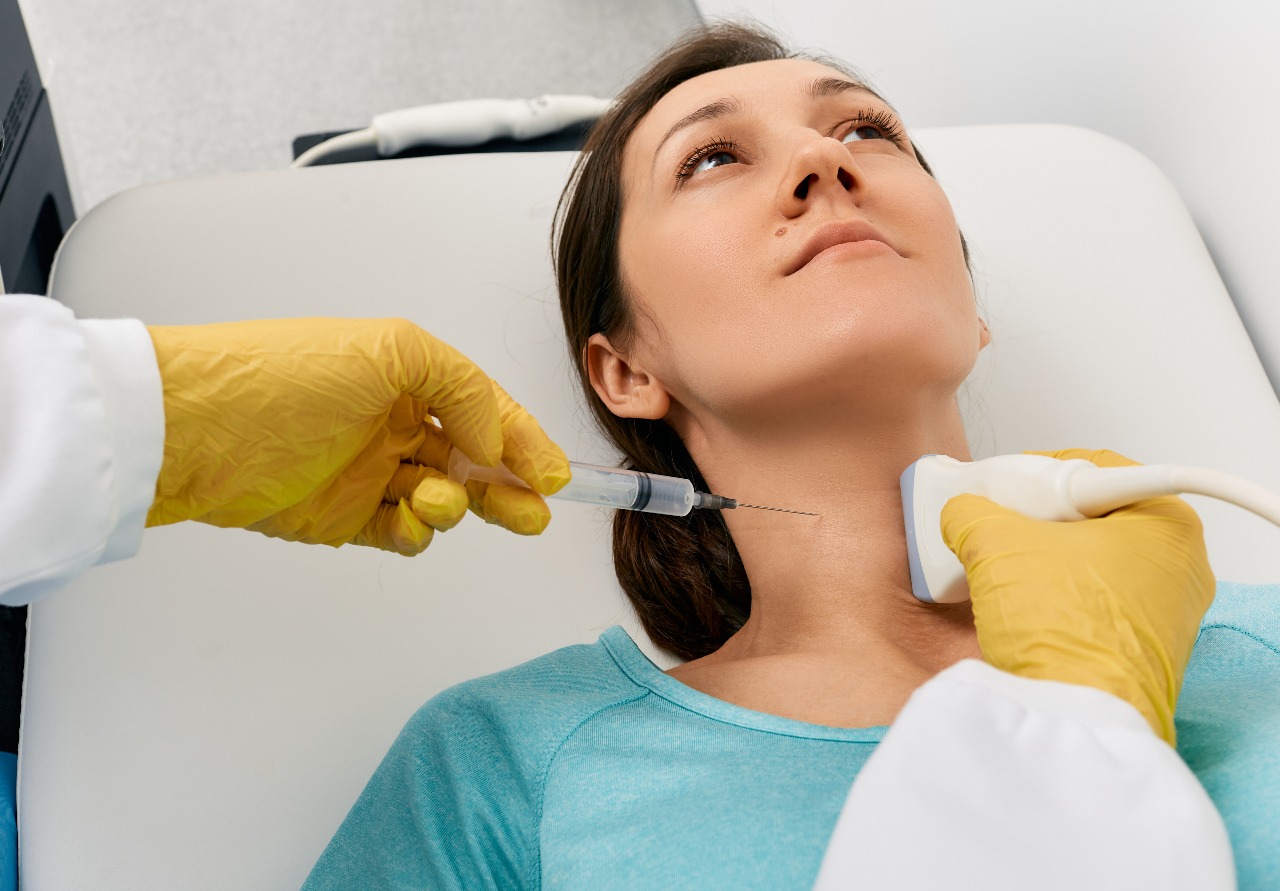
This article covers the most common thyroid problems, the symptoms that signal each one, which complications can develop if they’re left untreated, and when you should see a specialist. If you’re dealing with unexplained symptoms or have been told you have a thyroid nodule, this will help you understand what’s happening and what your options are.
Your thyroid is a small, butterfly-shaped gland at the front of your neck, and it controls more than most people realise. Metabolism, heart rate, body temperature, energy levels, weight, mood, and digestion. When the thyroid produces too much or too little hormone, the effects ripple across your entire body. According to data published in the Indian Journal of Endocrinology and Metabolism, an estimated 42 million people in India suffer from thyroid disorders. Women are affected far more than men, and many cases go undiagnosed for years because symptoms overlap with everyday complaints like fatigue or weight gain. Understanding what can go wrong is the first step toward catching problems early.
Hypothyroidism occurs when the thyroid doesn’t produce enough T3 and T4 hormones. Your metabolism slows, and your body’s systems start operating at reduced capacity. A population-based study from Cochin found hypothyroidism prevalence in Indian adults at 3.9%, with subclinical hypothyroidism at 9.4%. In women, it reached 11.4%.
The symptoms build gradually, which is why people dismiss them. Persistent fatigue that doesn’t improve with rest. Unexplained weight gain. Feeling cold when everyone else is comfortable. Dry skin, thinning hair, constipation. Depression and difficulty concentrating. Heavier menstrual periods in women.
Hashimoto’s thyroiditis, an autoimmune condition where the immune system attacks the thyroid gland, is the most common cause in India’s post-iodisation era. Left untreated, hypothyroidism can raise cholesterol, increase heart disease risk, and in pregnant women, affect foetal brain development.
Hyperthyroidism is the opposite. The thyroid overproduces hormones and everything speeds up. Rapid or irregular heartbeat, unintended weight loss, anxiety, trembling hands, excessive sweating, difficulty sleeping, and frequent bowel movements.
Graves’ disease, another autoimmune condition, is the most common cause. It can also cause a distinctive eye condition where the eyes bulge forward.
Untreated hyperthyroidism strains the heart. It can lead to atrial fibrillation (increasing stroke risk), weakened bones, and in extreme cases, a thyroid storm requiring emergency care.
Thyroid nodules are solid or fluid-filled lumps inside the gland. They’re extremely common and often discovered incidentally during scans done for other reasons.
Most are benign. But roughly 5 to 15% turn out to be cancerous, which is why any nodule needs evaluation with ultrasound and sometimes a fine needle biopsy.
Larger benign nodules can press against the windpipe or oesophagus, making it hard to swallow or breathe. Some produce excess thyroid hormone independently, causing hyperthyroid symptoms.
Traditionally, problematic nodules meant surgery: removing part or all of the thyroid, general anaesthesia, a visible scar, and lifelong hormone replacement. Dr. Gaurav Gangwani offers a different path. He specialises in microwave ablation and radiofrequency ablation, where targeted heat delivered through a thin needle under ultrasound guidance shrinks the nodule without removing the gland. Local anaesthesia, no scar, and most patients return to normal activity within a day or two.
Women are five to eight times more likely to develop thyroid disorders. The connection to reproductive health is significant. Thyroid dysfunction can cause irregular periods, difficulty conceiving, and pregnancy complications.
Untreated hypothyroidism in pregnancy increases the risk of miscarriage, pre-eclampsia, premature delivery, and impaired foetal brain development. Thyroid conditions can also mimic menopause symptoms, making diagnosis harder for women in their 40s and 50s.
A simple blood test measuring TSH and T3/T4 levels can identify most thyroid disorders. But knowing when to get tested is where many people fall behind.
See a doctor if you’re experiencing unexplained weight changes, persistent fatigue, changes in heart rate, swelling or a lump at the front of your neck, difficulty swallowing, or menstrual irregularities.
If you’ve been diagnosed with a thyroid nodule or goitre, seek a specialist who can evaluate whether monitoring, medication, or intervention is the right path. Dr. Gangwani’s Vascular Clinic in Borivali, Mumbai offers comprehensive thyroid evaluation including ultrasound-guided assessment and minimally invasive treatment for nodules. His approach prioritises preserving the thyroid gland wherever possible, helping most patients avoid surgery.
At any age, yes. Even newborns. Risk climbs after 40, especially for women.
No. Roughly 85 to 95% are benign. An ultrasound and biopsy confirm what you’re dealing with. Most people worry for nothing, but getting checked is still important.
They can. Hypothyroidism makes hair dry and brittle. Hyperthyroidism thins it out. It usually grows back once levels stabilise.
Dr. Gangwani uses radiofrequency and microwave ablation to shrink nodules without removing the gland. No scar, no general anaesthesia.
Every few years if you’re symptom-free. Annually if you have family history or you’re a woman over 35.
Dr. Gangwani Vascular Clinic, 302/TGN SQUARE 3rd floor Chandawarkar lane Borivali west Mumbai 400092
+91 9326195964
drgauravgangwani@gmail.com
Monday to Saturday: 8.30 am to 8.00 pm. For any quires & assistance please call on: +91 9082394787
Copyright 2026 – www.drgauravgangwani.com
Website Managed by SEO Discovery
WhatsApp us