

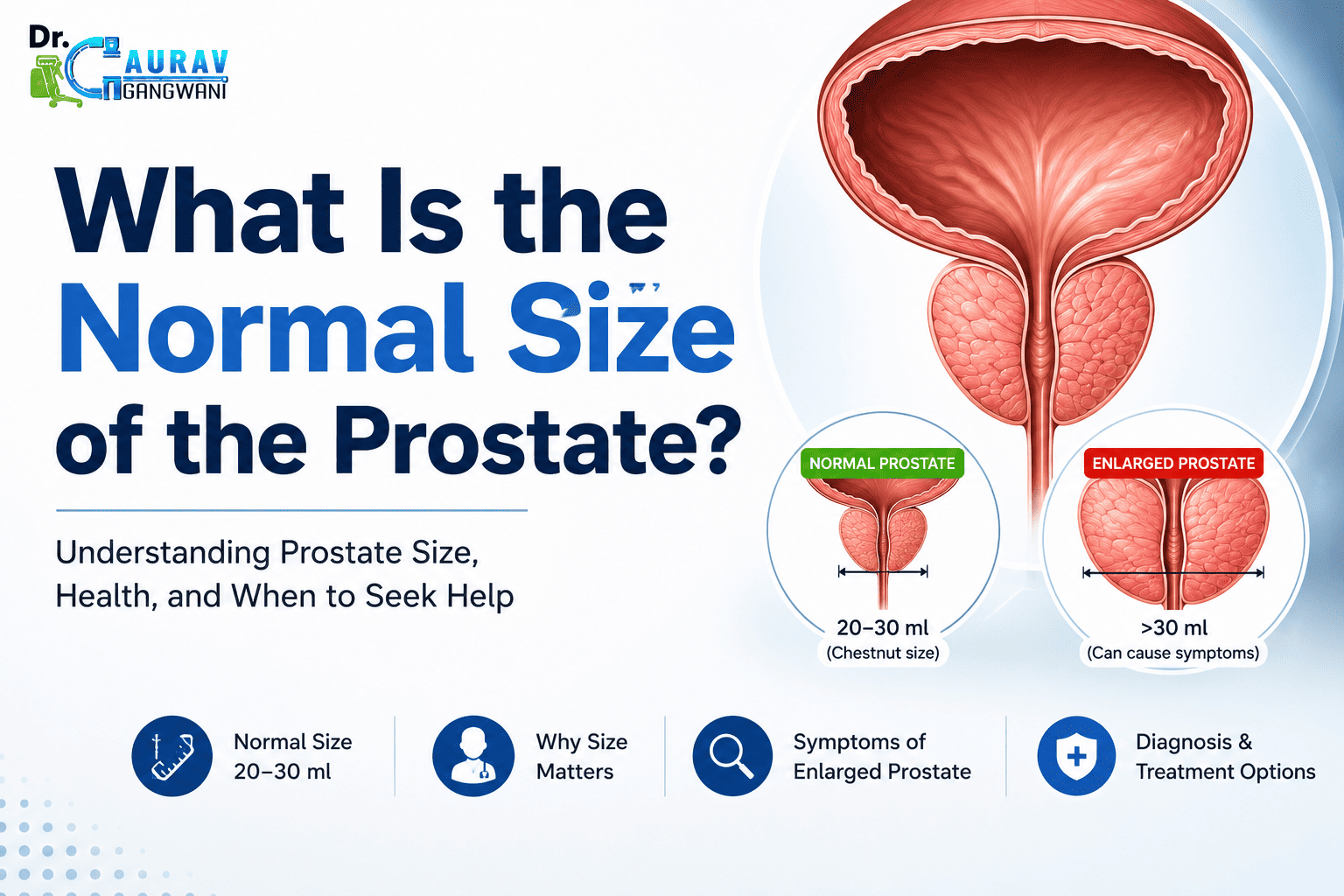
What Is the Normal Size of the Prostate?

Share on facebook
Facebook
Share on twitter
Twitter
Share on linkedin
LinkedIn
Effects of Piles, Varicocele, and Breast Lump Treatment
What Is the Normal Size of the Prostate?

Table of Contents

A healthy prostate usually approximately the size of a walnut. In the majority of men who are adults, the typical prostate size is between 20 and 30 cubic centimeters (cc). It is nevertheless normal for the prostate to get larger, but slowly as we age.

Note: Be aware that if the prostate expands and begins showing urinary symptoms, a prompt examination can reduce discomfort and even complications. In Dr. Gangwani’s Vascular Clinic, patients receive an accurate diagnosis and individualized care for prostate-related issues.

Understanding the Prostate Gland

  • Location & Structure: The prostate is a small gland that is part of the male reproductive system. It sits just below the bladder and surrounds the urethra, the tube that carries urine out of the body.
  • Primary Function: Its main job is to produce fluid that mixes with sperm to form semen. This fluid helps nourish and protect sperm, making it important for male fertility.
  • The Urinary Connection: Although the prostate is small, it has a big impact on urinary and reproductive health. Because the urethra passes through the center of the prostate, even a small increase in the gland’s size can affect the flow of urine.

Dimensions of a Normal Prostate

The physical measurements of a healthy, normal prostate in an adult male generally fall within these specific ranges:

  • Volume: Around 20 to 30 cubic centimeters (cc)
  • Weight: Usually 20 to 30 grams
  • Width: Approximately 3 cm wide
  • Span: Around 4 cm across
  • Thickness: About 2 cm thick
  • Visual Equivalent: About the size of a walnut

These measurements are considered normal for most younger adults. However, every person is different, so a slight variation does not always mean there is a problem. Doctors usually look at both the size of the prostate and the symptoms a patient is experiencing. 

Someone may have a slightly larger prostate but no discomfort, while another person with only mild enlargement may have noticeable urinary issues.

How Does the Prostate Change With Age?

The prostate does not stay the same size throughout life. During puberty, it grows because of hormonal changes. After the age of 40, many men experience another phase of gradual growth. This is a natural part of aging and happens because hormone levels continue to change over time.

Age Group Typical Prostate Size Urinary Impact
20–30 years Around 20 grams Generally none
40–50 years Slightly larger than normal Rarely noticeable
60 years and above May reach 30–40 grams or more Varies; symptoms may begin to show


Not every man develops symptoms as the prostate grows. Some continue to have normal urinary function, while others notice changes that slowly become more noticeable over the years.

When Is the Prostate Considered Enlarged?

Benign Prostatic Hyperplasia (BPH)

A prostate is usually considered enlarged when its size becomes significantly bigger than the normal range. BPH is one of the most common prostate conditions in older men.

It is important to note: BPH is not cancer and does not increase the risk of prostate cancer. However, it can interfere with normal urination because the enlarged gland presses against the urethra.

An enlarged prostate may:

  • Block the normal flow of urine
  • Make it difficult to empty the bladder
  • Increase the urge to urinate
  • Interrupt sleep because of frequent nighttime urination
  • Reduce the force of the urine stream

The size of the prostate does not always determine how severe the symptoms will be. Doctors evaluate both the gland’s size and the patient’s overall symptoms before recommending treatment.

Common Symptoms of an Enlarged Prostate

As the prostate grows, it can put pressure on the urethra and affect normal urination. Watch for these progressive signs:

  • Frequent urination (especially during the daytime)
  • Waking up several times at night to urinate (nocturia)
  • Weak or hesitant urine stream
  • Difficulty starting urination
  • Incomplete emptying (feeling like your bladder is still full)
  • Stopping and starting while urinating
  • Urgent, sudden need to urinate
  • Dribbling after urination is complete

If these symptoms continue for several weeks, it is important to consult a doctor.

What Causes the Prostate to Grow?

  • Natural Aging: Growing older remains the single biggest risk factor. As hormone levels change over time, the prostate gradually becomes larger.
  • Hormonal Changes: Variations in active testosterone and estrogen levels as men age trigger growth.
  • Family History: Genetics play a role; a family history of BPH increases your risk.
  • Obesity & Metabolic Issues: Obesity, diabetes, and metabolic conditions can exacerbate tissue growth.
  • Sedentary Lifestyle: A lack of regular physical activity is linked to a higher incidence of prostate symptoms.

While prostate enlargement cannot always be prevented, maintaining a healthy lifestyle can support better overall prostate health.

How Is Prostate Size Measured?

1. Physical Examination (DRE)

A digital rectal examination (DRE) allows the doctor to physically feel the prostate to check whether it is enlarged, firm, or irregular.

2. Ultrasound Imaging

An ultrasound provides highly accurate measurements of the prostate and helps estimate its total volume. This is one of the most common non-invasive imaging tests used.

3. MRI Scan

An MRI creates highly detailed images of the prostate and surrounding pelvic tissues, which may be recommended if additional detail is required.

4. PSA Blood Test

The Prostate-Specific Antigen (PSA) test does not directly measure prostate size, but it helps evaluate overall prostate health. Higher PSA levels may indicate inflammation or prompt further testing.

Can an Enlarged Prostate Be Dangerous?

  • Is it dangerous? An enlarged prostate itself is not usually life-threatening.
  • The Risk of Delay: If symptoms are ignored, complications can develop over time.

Potential Complications Include:

  • Urinary tract infections (UTIs)
  • Bladder stones
  • Progressive difficulty emptying the bladder
  • Acute urinary retention (sudden inability to urinate)
  • Kidney damage in severe, chronic cases

Early diagnosis helps prevent these problems and significantly improves quality of life.

How Can You Keep Your Prostate Healthy?

  • Hydrate Smarter: Drink enough water throughout the day, but taper off before bedtime.
  • Stay Active: Incorporate at least 30 minutes of moderate physical activity daily.
  • Watch Your Weight: Maintain a healthy weight to reduce metabolic strain on your prostate.
  • Eat Your Greens: Focus on eating more fruits, vegetables, and healthy fats.
  • Cut Back on Triggers: Limit processed foods, high-fat foods, caffeine, and alcohol if they worsen your symptoms.
  • Don’t Hold It: Avoid holding urine for long periods.
  • Get Screened: Schedule regular health checkups after age 50 (or earlier if you have a family history).

When Should You See a Doctor?

WARNING SIGNALS (Do Not Ignore):

  • Blood in the urine
  • Pain or burning while urinating
  • Difficulty passing urine or weak flow
  • Complete inability to urinate (Requires immediate emergency care)
  • Frequent urinary infections
  • Persistent urinary symptoms that disrupt your daily life

Early evaluation can help identify the exact cause and allow treatment before symptoms become more serious. If you notice any of these warning signs, Dr. Gaurav Gangwani can perform a detailed evaluation and recommend the most suitable treatment based on your condition.

Take the Right Step for Better Prostate Health

Knowing the normal size of the prostate helps you understand what changes are expected with age and when medical attention may be needed. While mild enlargement is common, persistent urinary symptoms should never be ignored.

Early diagnosis can prevent complications and improve your comfort and quality of life. If you are experiencing prostate-related symptoms or want a professional evaluation, the team at Dr Gangwani’s Vascular Clinic is dedicated to providing expert care and personalized treatment for your long-term health.

Frequently Asked Questions:

  1. What is the normal size of the prostate in men?
    A normal prostate is usually about the size of a walnut, with a volume of approximately 20–30 cc and a weight of around 20–30 grams.
  1. Does the prostate naturally get bigger with age?
    Yes. The prostate normally grows as men age, especially after the age of 40. Mild enlargement is a common part of aging.
  1. Is an enlarged prostate always a sign of cancer?
    No. Most enlarged prostates are caused by benign prostatic hyperplasia (BPH), which is a non-cancerous condition. Your doctor can perform tests to rule out other causes.
  1. How do doctors check the size of the prostate?
    Doctors may use a digital rectal examination (DRE), ultrasound, MRI, or other imaging tests to measure prostate size and assess its health.
  1. When should I visit Dr Gangwani’s Vascular Clinic for prostate symptoms?
    You should schedule an appointment if you have frequent urination, difficulty passing urine, a weak urine stream, blood in the urine, or persistent urinary discomfort. Early evaluation can help prevent complications.
Book Appointment