

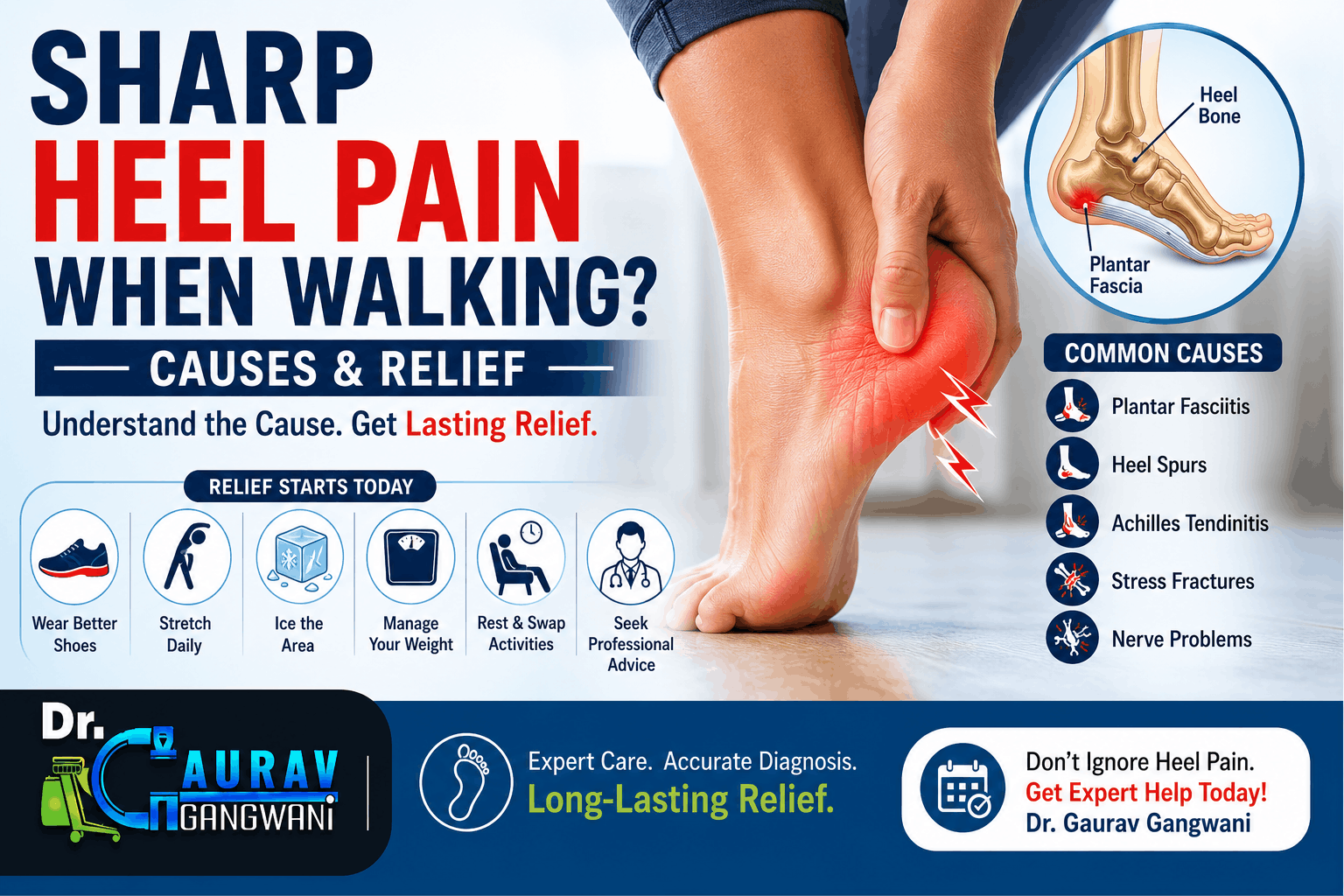
Have you ever stood up to take a few steps and felt a sudden, sharp pain in your heel? It can make even simple daily activities uncomfortable. The good news is that most cases of heel pain improve with early care, proper footwear, stretching, and the right treatment.
Instead of ignoring the pain, find out what’s causing it. Treating the problem early can help you recover faster and prevent long-term foot issues.
Your heel supports your entire body every time you stand, walk, or run. When one of the tissues, tendons, or bones in your foot becomes irritated, every step can feel painful.
Sometimes the pain starts suddenly after an injury. In other cases, it develops slowly because of repeated stress. The discomfort may be worse in the morning, after exercise, or even after sitting for a long time.
Knowing the cause is the first step toward finding lasting relief.
Not all heel pain has the same cause. Here are some of the most common conditions behind it.
Certain habits and lifestyle factors put extra pressure on your feet.
You may be at greater risk if you:
The more risk factors you have, the more important it becomes to take care of your feet.
Heel pain isn’t always something that goes away on its own. Some symptoms suggest it’s time to seek medical advice.
Watch for:
Early diagnosis often makes treatment easier and recovery faster.
While every case is different, these simple steps often help reduce heel pain.
Home care works well for many people, but it doesn’t solve every type of heel pain. If your symptoms continue despite resting, stretching, and wearing supportive shoes, there may be an underlying problem that needs medical attention.
Delaying treatment can allow the condition to worsen, making recovery take longer. A proper diagnosis helps identify the exact cause so you can receive the right treatment instead of relying on temporary pain relief.
The best treatment depends on what’s causing your heel pain. After examining your foot and understanding your symptoms, your doctor may suggest one or more of the following:
Most people recover well without surgery when treatment begins early.
Taking care of your feet doesn’t have to be difficult. A few healthy habits can go a long way in preventing future heel problems.
Sharp heel pain can affect your work, exercise, and everyday routine, but it doesn’t have to become a permanent part of your life. The right care at the right time can help you move comfortably again.
If your heel pain isn’t improving or keeps coming back, don’t wait for it to get worse. Dr. Gaurav Gangwani provides personalized evaluation and treatment to help patients find long-lasting relief and return to their daily activities with confidence.
Morning heel pain is commonly linked to plantar fasciitis. While you sleep, the tissue tightens, making the first few steps painful.
Yes. Shoes without proper cushioning or arch support can place extra stress on your heel and increase the risk of pain over time.
Gentle walking may help some people, but if walking increases your pain, it’s best to reduce activity until your heel begins to recover.
Mild cases often improve within a few weeks with proper care. More severe conditions may take several months, depending on the cause and treatment.
You should seek medical attention if your heel pain lasts longer than two weeks, becomes severe, affects your ability to walk, or is accompanied by swelling, numbness, or pain after an injury. Early treatment often leads to a quicker and more complete recovery.
Dr. Gangwani Vascular Clinic, 302/TGN SQUARE 3rd floor Chandawarkar lane Borivali west Mumbai 400092
+91 9326195964
drgauravgangwani@gmail.com
Monday to Saturday: 8.30 am to 8.00 pm. For any quires & assistance please call on: +91 9082394787
Copyright 2026 – www.drgauravgangwani.com
Website Managed by SEO Discovery
WhatsApp us