

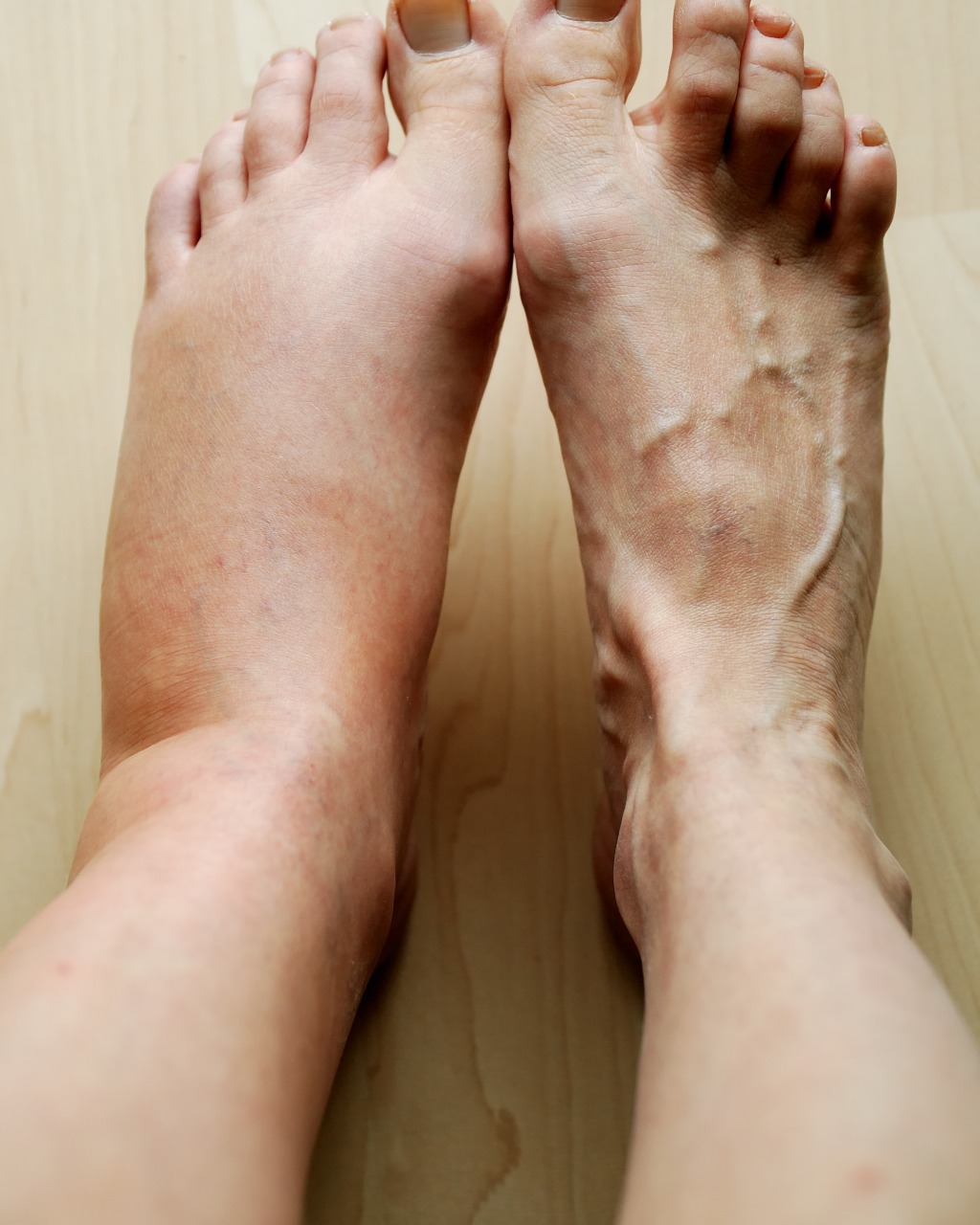
You look down at your legs and notice veins that seem darker than they used to be, maybe blue-purple, maybe almost black, pushing against the skin in a way they didn’t before. This blog explains what’s behind that colour change, when it’s harmless, and when your veins are telling you something is going wrong.
The Cleveland Clinic notes that varicose veins affect about 1 in 3 adults and present as blue, purple, or dark bulging veins just beneath the skin’s surface. They’re not rare, and they’re not just cosmetic. Left alone, they can progress to chronic venous insufficiency, blood clots, and skin ulcers that are difficult to heal.
Dismissing dark veins as “just how my legs look now” is how a treatable early-stage problem quietly turns into something that requires far more intervention later.
Every vein carries deoxygenated blood back toward your heart, and that blood is naturally darker than arterial blood. Light passing through skin makes these veins look blue, green, or purple depending on your skin tone and how deep the vein sits. That’s completely normal.
The problem starts when veins that used to be flat and faintly visible become raised, twisted, and noticeably darker. That shift in appearance typically happens because the one-way valves inside the vein have weakened or failed, allowing blood to flow backward and pool in the lower leg. The more blood that collects, the more the vein stretches, swells, and darkens. A vein that looks nearly black is often one that’s significantly engorged with stagnant blood sitting under pressure.
Flat, faintly visible veins on your hands, feet, or legs that have always been there are not a concern. What does warrant attention is a change from what your veins used to look like, especially if it’s accompanied by any of the following:
That ankle discolouration is a particularly important sign because it means venous pressure has been high long enough for iron to leach from red blood cells into the tissue. By that point, you’re already at a more advanced stage of the disease.
Varicose veins don’t stabilise on their own. The damaged valves don’t repair themselves, pooling gets worse, and the pressure keeps building. Over time that leads to chronic swelling, permanent skin changes, and eventually venous ulcers near the ankles. Blood clots inside varicose veins are another risk, ranging from superficial thrombophlebitis to the more serious deep vein thrombosis.
Dr. Gaurav Gangwani, an interventional radiologist in Mumbai, treats varicose veins using endovenous laser ablation and sclerotherapy. Laser ablation seals the damaged vein shut from inside through a tiny puncture, and sclerotherapy collapses smaller spider and feeder veins with an injectable solution. Both are done under local anaesthesia, leave no scars, and patients typically walk out the same day. Recovery takes 24 to 48 hours for most people, which is a different experience entirely from the weeks of downtime that came with traditional vein stripping surgery.
If your leg veins are darker, more raised, or more visible than they used to be, that’s your circulatory system showing you something that a quick assessment can explain and, in most cases, a minimally invasive procedure can fix. Dr. Gaurav Gangwani is one of Mumbai’s leading interventional radiologists, offering non-surgical varicose vein treatment using laser ablation and sclerotherapy at his clinic in Borivali, with same-day discharge and no scarring.
Dr. Gangwani Vascular Clinic, 302/TGN SQUARE 3rd floor Chandawarkar lane Borivali west Mumbai 400092
+91 9326195964
drgauravgangwani@gmail.com
Monday to Saturday: 8.30 am to 8.00 pm. For any quires & assistance please call on: +91 9082394787
Copyright 2026 – www.drgauravgangwani.com
Website Managed by SEO Discovery
WhatsApp us