

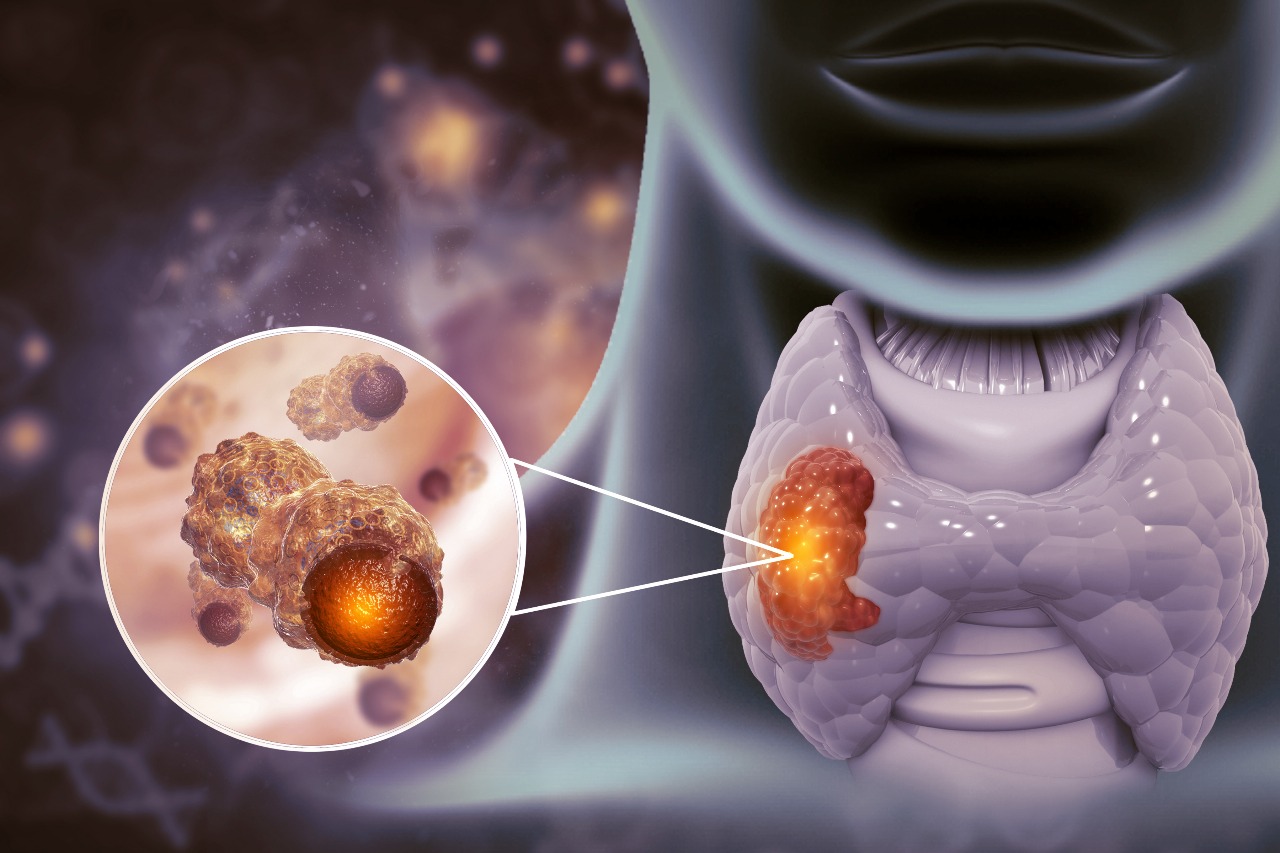
The thyroid gland is a butterfly-shaped organ placed at the base of the neck, which controls the metabolism of your body, secretes hormones in the body, etc. Due to its significance, any abnormalities in this gland, like nodules or cysts, often create a lot of anxiety. Although most thyroid nodules are benign, the colloid cyst thyroid is a rare one.
Thus, knowing the relation between the colloid cyst thyroid causes and their dissimilarity with malignant nodules and their signs that also overlap with signs from complications like thyroid nodule cancer is vital to be detected at the right time and treated properly. In this guide, we look into what a colloid cyst is, how and why they form, and what risk factors could mean you may develop more colloid cysts.
What is a Colloid Cyst in the Thyroid?
Colloid cysts are mostly a result of colloid, a material important for producing the thyroid hormone. These cysts occur when follicles in the thyroid either swell or fill with fluid. Colloid cysts, unlike cancerous nodules, are typically benign and asymptomatic and often found incidentally on neck ultrasound.
Still, all thyroid lumps should be evaluated by a physician to exclude the possibility of cancer, as some characteristics of thyroid nodule-related cancer (their rapid growth or voice changes, for example) may appear to be benign cysts at first.
Colloid Cyst Thyroid Causes
Colloid cysts are benign, but the precise colloid cyst thyroid causes are still under study. There are also recognized multiple contributing factors and mechanisms, including:
Excess of Colloid Material: The chief reason is an excessive production of colloid material or poor drainage of colloid inside a thyroid follicle, resulting in expansion and cyst formation.
Low iodine intake: It has been linked to abnormal growth of thyroid tissue and more nodules or cysts forming.
Hormonal Imbalances: TSH fluctuations cause cystic changes in follicles
Aging of Thyroid Tissues: Natural wear-and-tear of thyroid follicles over time often leads to degeneration and cystic changes.
Family History: The likelihood of getting cysts is higher for individuals with a family history of thyroid diseases.
Environmental Factors: Increased irradiation, pollutants, or endocrine-disrupting chemicals could be one of the contributing factors to nodule or cyst recurrences.
Identifying Risk Features for Colloid Cyst Development
Some individuals are at greater risk for colloid cyst formation. Knowing these risk factors helps with surveillance and detection so that they can be picked up early:
Age: more frequent above the age of 40.
Sex: Thyroid nodules and cysts are more common in females, causing symptoms of thyroid nodule cancer.
Iodine Deficiency or Excess: Thyroid function is affected by both excess and insufficient iodine supply.
Family history: Increased risk with close relatives with thyroid nodules, cancers, or goiters.
Radiation exposure: A history of radiation treatment to the neck or prolonged exposure to environmental radiation increases risks.
Long-term psychological stress and change in hormone: Thyroid morphology is generally affected by endocrine activity fluctuations, particularly in females.
Symptoms Linked to Colloid Cysts
Most of the time colloid cysts are asymptomatic and small. However, if they grow, they can cause symptoms compatible with things that you would get with thyroid nodules in general, things like:
A neck lump that is seen or felt
Localized soreness or sense of fullness
Dysphagia (swallowing difficulty) if the cyst is compressing the esophagus
Swelling: Mild cosmetic concern
However, the key here is to make a distinction between these harmless sensations, where the symptoms of thyroid nodule cancer are more severe in nature, hoarseness that gets worse by the day, a cough that isn’t going away, and a nodule that keeps on growing quickly.
Diagnostic Procedures
When a thyroid lump is suspected of malignancy, healthcare providers use several tools to assess the lump.
Ultrasound: As a first-line imaging modality to characterize size, composition, and cyst characteristics
Fine-Needle Aspiration Biopsy (FNAB): Aspiration that examines for malignancy through cells or cyst fluid
Thyroid Function Tests: Check levels of TSH and other hormones to assess how the thyroid is working.
Thyroid scan (scintigraphy): Indicates hot (hyperfunctioning) or cold nodules — the latter is associated with increased suspicion.
Such evaluations guarantee that benign colloid cysts are separated from malignant nodules.
Long-Term Outlook and Management
The minor intervention is necessary for almost all colloid cysts. For stable and asymptomatic cysts, which majority of the patients have, are treated by just watching and waiting with ultrasounds every few months and not aggressively assailing them right away. Cysts need not be treated unless they become quite large, painful, or cosmetically significant.
Management options of symptoms of thyroid nodule cancer include:
Follow up: Monitoring as routine if no worrying features are identified.
Aspiration: Fluid can be drawn out of the cyst to relieve pressure, but a recurrence can occur.
Invasive Removal: Not for use unless the cyst is suspected or unbearably symptomatic.
Percutaneous Ethanol Injection (PEI): A minimally invasive treatment where cyst fluid is aspirated and absolute alcohol (a chemical sclerosant) is injected into the cavity. This destroys the cyst lining and helps prevent recurrence.
Thermal Ablation (RFA or Microwave): Advanced non-surgical options such as Radiofrequency Ablation (RFA) or Microwave Ablation use controlled heat energy to shrink or eliminate thyroid nodules effectively while preserving surrounding healthy tissue.
Bottom Line
Usually, Colloid cysts of the thyroid are benign, non-aggressive, and non-harmful. However they are often noticed around the same time as thyroid cancer is coming up in discussions, thus it is important to know what causes them versus the underlying thyroid cancer risk factors.
Identifying these factors and being able to separate benign cysts from the fundamentals of what might more frighteningly indicate the cancer of the thyroid nodule is necessary for timely treatment and tranquillity.
More often than not, if you are having symptoms of thyroid nodule cancer it is important not to put off an evaluation. At the Dr. Gaurav Gangwani clinic, a specialist for symptoms of thyroid will provide expert diagnosis, tailored treatment approaches, and compassionate care to every patient with thyroid problems, and the best guidance for benign and complex cases.
Borivali, Mumbai. India
+91 9326195964
drgauravgangwani@gmail.com
www.drgauravgangwani.com
Monday to Saturday: 8.30 am to 8.00 pm. For any quires & assistance please call on: +91 9326195964
WhatsApp us