

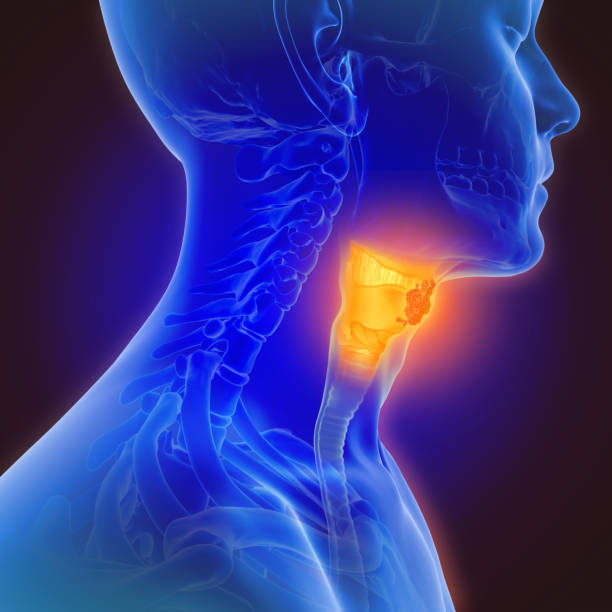
Most people who search for bethesda thyroid aren’t looking for a lecture on pathology; they just want to know one thing: does this mean cancer, and what happens next? This article can help you understand the term, but it can’t tell you what your specific result means. Only the doctor who ordered the biopsy has the full picture of the ultrasound, the history, and the actual slide.
Here’s the short version. The Bethesda System is a standardized way of classifying what a pathologist finds during a thyroid fine-needle aspiration (FNA). It sorts results into categories that run from nondiagnostic all the way to malignant.
A study out of Sri Ramachandra Medical College in Chennai, published in the Indian Journal of Endocrinology and Metabolism, is a good reminder of why a Bethesda number shouldn’t be read on its own. The researchers found a strong correlation between ultrasound-based TIRADS scoring and Bethesda cytology results, meaning your ultrasound findings genuinely change how a nodule gets interpreted, not just your biopsy category alone.
Knowing your category still helps. It gives you the right words for the conversation with your doctor, instead of walking in confused by a number on a page.
And if a benign nodule ever does need treatment down the line, surgery isn’t automatically the only route. Selected patients have minimally invasive options, like thyroid nodule ablation. Dr. Gaurav Gangwani (MBBS, DNB, FVIR), Consultant and Head of Interventional Radiology, offers this as a non-surgical alternative when it’s appropriate for the case.
A thyroid nodule is just a lump or an odd little patch inside the thyroid gland; most people never even feel it themselves; it usually turns up on an ultrasound or during a routine exam. To figure out what’s actually going on in there, doctors reach for a fine-needle aspiration, or FNA. A thin needle goes in, pulls out a handful of cells, and those cells end up on a slide under a pathologist’s microscope.
That pathologist needs a common language to describe what they see; that’s what the Bethesda System for Reporting Thyroid Cytopathology provides. In short:
Thyroid nodule → FNA biopsy → cells examined → Bethesda category assigned
The category describes the sample, not the thyroid gland as a whole.
No. A Bethesda result does not automatically mean cancer. Bethesda I and II are not malignant categories, while III and IV are indeterminate. Bethesda V means the sample is suspicious for malignancy, and Bethesda VI is the malignant category.
That’s why doctors never read a Bethesda number in isolation. They weigh it against ultrasound characteristics, personal and family history, a physical exam, and sometimes molecular testing before deciding next steps. Risk figures can also shift depending on the population studied, which is one more reason a single number shouldn’t be treated as a personal cancer-risk percentage.
Most labs list both the Bethesda category number and its name, for example:
Bethesda II: Benign
or
Bethesda V: Suspicious for Malignancy
The Bethesda label describes the cells collected during the FNA; it does not, by itself, describe the entire thyroid gland or determine the final diagnosis.
The Bethesda System gives doctors and pathologists a standardized way to report thyroid FNA results across six categories, from nondiagnostic to malignant. It is one part of the picture, and your doctor will interpret it alongside your imaging and clinical history to decide what happens next. Dr. Gangwani’s Vascular Clinic can help patients understand their thyroid findings and discuss appropriate treatment options when needed.
It’s the standardized system used to classify the cytology findings from a thyroid FNA biopsy.
A Bethesda result helps standardize thyroid FNA findings, but it isn’t perfect. This is interpreted along with ultrasound results and other clinical data.
Honestly, it depends on your category, your ultrasound, and the whole picture your doctor’s looking at. Sometimes they’ll just keep an eye on it; sometimes they’ll repeat the FNA or run more tests.
Yes, it can. FNA only samples part of the nodule, not the whole thing, so a Bethesda result can occasionally miss something. That’s why it’s weighed alongside imaging and other clinical findings, not read alone.
No. A nodule is the actual mass that is under scrutiny. Bethesda is the system used to classify the cells taken from the nodule.
Dr. Gangwani Vascular Clinic, 302/TGN SQUARE 3rd floor Chandawarkar lane Borivali west Mumbai 400092
+91 9326195964
drgauravgangwani@gmail.com
Monday to Saturday: 8.30 am to 8.00 pm. For any quires & assistance please call on: +91 9082394787
Copyright 2026 – www.drgauravgangwani.com
Website Managed by SEO Discovery
WhatsApp us